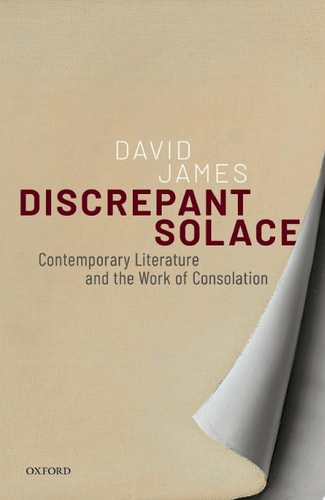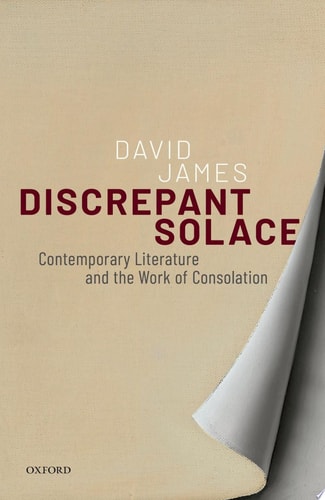
Discrepant Solace
0
0
As an Amazon Associate and affiliate partner, Menrva Books earns from qualifying purchases. Learn more
Author Description
Consolation Has Always Played An Uncomfortable Part In The Literary History Of Loss. But In Recent Decades Its Affective Meanings And Ethical Implications Have Been Recast By Narratives That Appear At First Sight To Foil Solace Altogether. Illuminating This Striking Archive, Discrepant Solace Considers Writers Who Engage With Consolation Not As An Aesthetic Salve But As An Enduring Problematic, One That Unravels At The Centre Of Emotionally Challenging Works Of Late Twentieth- And Twenty-first-century Fiction And Life-writing. The Book Understands Solace As A Generative Yet Conflicted Aspect Of Style, Where Microelements Of Diction, Rhythm, And Syntax Capture Consolation's Alternating Desirability And Contestation. With A Wide-angle Lens On The Contemporary Scene, David James Examines Writers Who Are Rarely Considered In Conversation, Including Sonali Deraniyagala, Colson Whitehead, Cormac Mccarthy, W.g. Sebald, Doris Lessing, Joan Didion, J. M. Coetzee, Marilynne Robinson, Julian Barnes, Helen Macdonald, Ian Mcewan, Colm Tóibín, Kazuo Ishiguro, Denise Riley, And David Grossman. These Figures Overturn Critical Suppositions About Consolation's Kinship With Ideological Complaisance, Superficial Mitigation, Or Dubious Distraction, Producing Unsettling Perceptions Of Solace That Shape The Formal And Political Contours Of Their Writing. Through Intimate Readings Of Novels And Memoirs That Explore Seemingly Indescribable Experiences Of Grief, Trauma, Remorse, And Dread, James Demonstrates How They Turn Consolation Into A Condition Of Expressional Possibility Without Ever Promising Us Relief. He Also Supplies Vital Traction To Current Conversations About The Stakes Of Thinking With Contemporary Writing To Scrutinize Affirmative Structures Of Feeling, Revealing Unexpected Common Ground Between The Operations Of Literary Consolation And The Urgencies Of Cultural Critique. Discrepant Solace Makes The Close Reading Of Emotion Crucial To Understanding The Work Literature Does.
Menrva's Summary
THE THESIS
This book investigates how contemporary literature reconfigures the ethical and aesthetic implications of consolation within narratives that initially appear to reject it. David James, a scholar of contemporary literature, utilizes a framework of close reading to analyze how authors navigate the tension between the desire for comfort and the reality of trauma. He argues that solace functions as a generative, stylistic, and political problem rather than a simple emotional remedy in late twentieth and twenty-first-century texts.
THE SCOPE MAP
What You Will Find
- Analysis of works by authors including Colson Whitehead, Cormac McCarthy, Joan Didion, and Kazuo Ishiguro.
- Examination of micro-elements of style such as diction, rhythm, and syntax in the context of grief.
- Theoretical exploration of the intersection between literary consolation and cultural critique.
Scope Limits
- The study focuses primarily on late twentieth and twenty-first-century fiction and life-writing.
- It does not provide a comprehensive history of consolation across all literary eras.
THE AUTHORITY PERSPECTIVE
Scholars and critics recognize this work as a significant contribution to the study of affect and literary form. Readers frequently note the academic density of the prose and the author's ability to bridge the gap between emotional experience and formalist analysis.
Page Count:
320
Publication Date:
2019-01-01
Publisher:
Oxford University Press
ISBN-10:
0192506935
ISBN-13:
9780192506931
Contemporary
Non-Fiction
Literary Criticism
Grief Studies
Literary theory
Community Tags
Similar Books