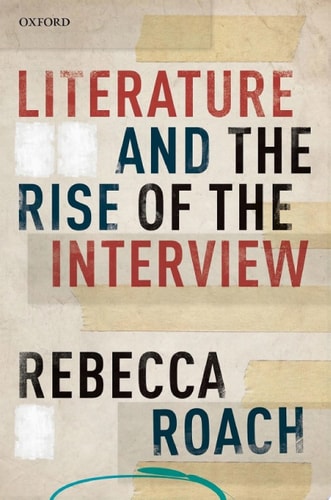
Literature and the Rise of the Interview
0
0
As an Amazon Associate and affiliate partner, Menrva Books earns from qualifying purchases. Learn more
Author Description
Today interviews proliferate everywhere: in newspapers, on television, and in anthologies; as a method they are a major tool of medicine, the law, the social sciences, oral history projects, and journalism; and in the book trade interviews with authors are a major promotional device. We live in an 'interview society'. How did this happen? What is it about the interview form that we find so appealing and horrifying? Are we all just gossips or is there something more to it? What are the implications of our reliance on this bizarre dynamic for publicity, subjectivity, and democracy? Literature and the Rise of the Interview addresses these questions from the perspective of literary culture. The book traces the ways in which the interview form has been conceived and deployed by writers, and interviewing has been understood as a literary-critical practice. It excavates what we might call a 'poetics' of the interview form and practice. In so doing it covers 150 years and four continents. It includes a diverse rostrum of well-known writers, such as Henry James, T. S. Eliot, Ezra Pound, Djuna Barnes, William Burroughs, Philip Roth, J. M. Coetzee and Toni Morrison, while reintroducing some individuals that history has forgotten, such as Betty Ross, 'Queen of Interviewers', and Julian Hawthorne, Nathaniel's profligate son. Together these stories expose the interview's position in the literary imagination and consider what this might tell us about conceptions of literature, authorship, and reading communities in modernity.
Menrva's Summary
THE THESIS
This book investigates the historical development and cultural significance of the interview as a dominant form of communication and literary practice in modern society. Rebecca Roach, a scholar of modern literature, examines how the interview evolved from a journalistic tool into a central mechanism for shaping authorship, subjectivity, and public discourse. By analyzing the intersection of literature and the interview, the author argues that this form reflects deeper tensions regarding publicity, democracy, and the construction of the literary self.
THE SCOPE MAP
What You Will Find
- A historical analysis spanning 150 years and four continents.
- A critical examination of the 'poetics' of the interview form.
- Case studies of prominent writers including Henry James, T. S. Eliot, and Toni Morrison.
- Profiles of historical figures like Betty Ross and Julian Hawthorne.
Scope Limits
- The text focuses primarily on literary culture rather than the technical methodologies of social science or legal interviewing.
- It does not provide a comprehensive history of broadcast media interviewing techniques.
THE AUTHORITY PERSPECTIVE
Scholars and critics recognize this work as a significant contribution to the study of literary history and media evolution. Readers frequently note the academic rigor and the breadth of the archival research presented throughout the text.
Page Count:
293
Publication Date:
2018-01-01
Publisher:
OUP Oxford
ISBN-10:
0192559338
ISBN-13:
9780192559333
History
Non-Fiction
Literature History
Indigenous
Interviews
Media Studies
Literary Criticism
Community Tags
Similar Books