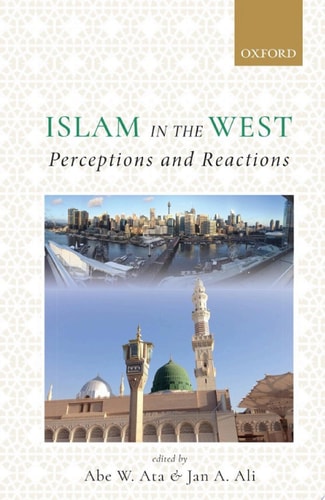
Islam in the West: Perceptions and Reactions
0
0
As an Amazon Associate and affiliate partner, Menrva Books earns from qualifying purchases. Learn more
Author Description
The bombings in New York and Washington in 2001 and subsequent terrorist attacks in different countries of the West have led to fast changing socio-cultural and political contexts where Islam has been depicted as a global threat. The meaning of being a Muslim has undergone rapid transformation with the interplay of perceptions and misperceptions impacted by, for instance, the Iranian Revolution of 1978–9, the Lockerbie bombing in 1988, the Gulf War of 1990–1, and the clash of civilizations thesis propagated by Samuel Huntington in 1993. This book examines the way Muslims and mainstream societies in the West perceive each other by taking into account themes like cultural pluralism, media, religious education, interfaith dialogue, and so on. It argues that Muslims are not defined solely by their faith but as an emerging group which is self-critical, reflective, and focused on clearing the misconceptions associated with their identity. Further, it posits that Westerners who are more knowledgeable about Muslims usually express positive opinions about Islam, thereby arguing that the knowledge about and attitudes towards Islam are interrelated.
Menrva's Summary
THE THESIS
This book investigates the evolving perceptions and reactions surrounding Islam in Western societies following significant global events. It examines how events like the 9/11 attacks, the Iranian Revolution, and the Gulf War have shaped the portrayal of Islam as a global threat, leading to a rapid transformation in the meaning of being Muslim. The authors explore the mutual perceptions between Muslims and mainstream Western societies, considering factors such as cultural pluralism, media representation, religious education, and interfaith dialogue. The core argument is that Muslims are a self-critical and reflective emerging group, and that increased knowledge about Muslims correlates with more positive attitudes towards Islam.
THE SCOPE MAP
- Analysis of socio-cultural and political shifts impacting Islam's perception in the West post-2001.
- Examination of specific historical events (Iranian Revolution, Lockerbie bombing, Gulf War, Huntington's thesis) and their influence on Western views of Islam.
- Exploration of themes including cultural pluralism, media portrayals, religious education, and interfaith dialogue.
- Argument that Muslims are not solely defined by faith but as a self-critical and reflective emerging group.
- Posits a correlation between knowledge about Muslims and positive opinions towards Islam.
- Focus on clearing misconceptions associated with Muslim identity in Western contexts.
THE AUTHORITY PERSPECTIVE
The book addresses the complex interplay of perceptions and reactions to Islam in Western societies, particularly in the wake of global events that have led to Islam being depicted as a threat. It argues for a nuanced understanding of Muslim identity, emphasizing self-criticism and reflection, and suggests a positive relationship between knowledge of Muslims and favorable attitudes towards Islam. The analysis incorporates themes such as cultural pluralism, media influence, religious education, and interfaith dialogue to explore these dynamics. The work aims to counter misconceptions and highlight the evolving nature of Muslim identity within Western contexts.
Page Count:
280
Publication Date:
2018-08-28
Publisher:
Oxford University Press
ISBN-10:
0199093660
ISBN-13:
9780199093663
Religion
History
Non-Fiction
Politics
Community Tags
Similar Books














