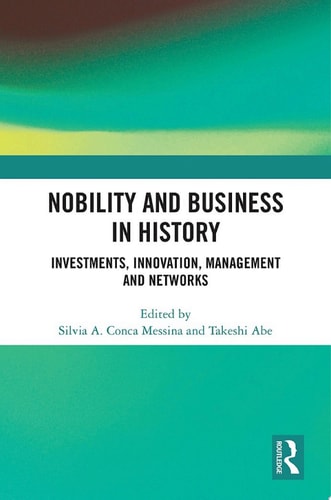
Nobility and Business in History
0
0
As an Amazon Associate and affiliate partner, Menrva Books earns from qualifying purchases. Learn more
Author Description
This book reconsiders the role of nobility as influential economic players and provides new insights into the business activities of noblemen in Europe and Asia during the nineteenth century thus offering up opportunities for comparison in an age of economic expansion and globalisation. What was the contribution of the nobility to the economy? Can we consider noblemen to have been endowed with an entrepreneurial spirit? Research shows that far from being passive, throughout the century the European nobility were widely involved in business, carried on innovations, refined management strategies, and diversified their investments from agriculture to transport, industry and finance. Both in Europe and Asia businesses were embedded in social networks and personal relationships. In modern Japan after the Meiji Restoration - the unique case in Asia where a Western-style nobility was created - business, trust, personal connections and aristocratic marriages were intertwined and Japanese noblemen, especially the richer ones, acted as promoters of industrialisation, even though their role was certainly limited in time and space. This volume will be of great interest to scholars and researchers in the fields of economics, management, political science, sociology, public management and history. The chapters in this book were originally published as a special issue of Business History.
Menrva's Summary
THE THESIS
This book reconsiders the role of nobility as influential economic players and provides new insights into the business activities of noblemen in Europe and Asia during the nineteenth century. It investigates the contribution of the nobility to the economy and questions whether noblemen can be considered to have been endowed with an entrepreneurial spirit. The research presented demonstrates that the European nobility were widely involved in business, carried on innovations, refined management strategies, and diversified their investments across various sectors. In modern Japan, following the Meiji Restoration, noblemen also acted as promoters of industrialization, with businesses embedded in social networks and personal relationships.
THE SCOPE MAP
- What was the contribution of the nobility to the economy?
- Can noblemen be considered to have been endowed with an entrepreneurial spirit?
- Analysis of the European nobility's involvement in business, innovation, and management strategies during the nineteenth century.
- Examination of diversified investments by the nobility, including agriculture, transport, industry, and finance.
- Exploration of how businesses were embedded in social networks and personal relationships in both Europe and Asia.
- Case study of Japanese noblemen after the Meiji Restoration as promoters of industrialization.
- Comparison of business activities and economic roles of nobility across Europe and Asia.
- Chapters originally published as a special issue of Business History.
THE AUTHORITY PERSPECTIVE
This volume is of significant interest to scholars and researchers across economics, management, political science, sociology, public management, and history. The collection offers a comparative perspective on the economic roles of nobility during an era of expansion and globalization. It challenges traditional views by presenting evidence of active entrepreneurial engagement and strategic investment by noblemen. The inclusion of both European and Asian case studies provides a broad scope for understanding the intersection of aristocracy and commerce.
Page Count:
270
Publication Date:
2023-03-31
Publisher:
Taylor & Francis
ISBN-10:
1000858626
ISBN-13:
9781000858624
History
Non-Fiction
Community Tags
Similar Books