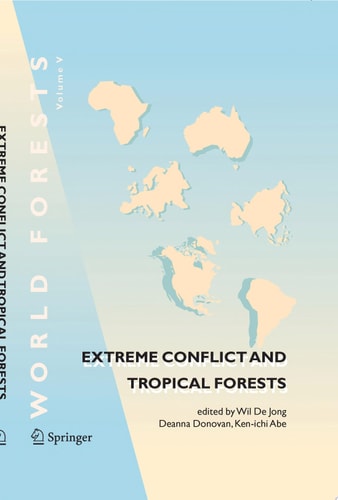
Extreme Conflict and Tropical Forests
0
0
As an Amazon Associate and affiliate partner, Menrva Books earns from qualifying purchases. Learn more
Author Description
There are many compelling reasons for policymakers to pay more attention to forested regions and invest more resources there. Forests provide valuable products and en- ronmental services and several hundred million extremely poor people live near them. Perhaps the most compelling reason of all, however, is that unless policymakers take forest governance seriously and respond better to the needs of the people living there, these regions will continue to be breeding grounds for violent con?ict, banditry, and illicit crops. From Nicaragua’s Atlantic Coast to the jungles of Cambodia, there are several dozen countries around the world that have experienced severe breakdowns in law and order in their forested regions. In many of these cases those breakdowns had widespread economic, social, and political consequences that have threatened entire societies. You would think that after all of the suffering over the last few decades in the forested regions of Colombia, Peru, Mexico, Guatemala, the two Congo’s, Liberia, Mozambique, Philippines, Solomon Islands, Nepal, Angola, Rwanda, Nicaragua, Cote ˆ d’Ivoire, Myanmar, Bangladesh, India, Sri Lanka, Indonesia, Sierra Leone, Senegal, Sudan, Uganda, and Vietnam people would begin to take note. After all, they don’t call it jungle warfare for nothing.
Menrva's Summary
THE THESIS
Forest governance is critical to preventing violent conflict and maintaining social order in forested regions worldwide. The book argues that neglecting the needs of people living in and around forests, and failing to address forest governance seriously, directly contributes to widespread lawlessness, banditry, and illicit activities. Drawing on examples from numerous countries across different continents, the authors demonstrate how breakdowns in order within these regions have had profound and destabilizing consequences for entire societies, suggesting that a proactive approach to forest management and policy is essential to avert further suffering and conflict.
THE SCOPE MAP
- Analysis of the link between forest governance and violent conflict.
- Case studies from diverse global regions including Nicaragua, Cambodia, Colombia, Peru, Mexico, Guatemala, the Congo, Liberia, Mozambique, Philippines, Solomon Islands, Nepal, Angola, Rwanda, Cote d’Ivoire, Myanmar, Bangladesh, India, Sri Lanka, Indonesia, Sierra Leone, Senegal, Sudan, Uganda, and Vietnam.
- Examination of the economic, social, and political consequences of lawlessness in forested areas.
- Discussion of the role of forests in providing valuable products and environmental services.
- Exploration of the challenges faced by hundreds of millions of impoverished people living near forests.
- Argument for increased policy attention and resource investment in forested regions.
THE AUTHORITY PERSPECTIVE
This book examines the critical intersection of forest governance and violent conflict, drawing on extensive global case studies. The authors present a compelling argument that neglecting the needs of forest-dependent populations and failing to implement effective governance structures directly fuels instability, banditry, and illicit economies. The work highlights the widespread societal repercussions of such breakdowns, underscoring the urgent necessity for policymakers to prioritize forest regions and their inhabitants to prevent further conflict and suffering.
Page Count:
184
Publication Date:
2007-04-08
Publisher:
Springer Nature
ISBN-10:
1402054629
ISBN-13:
9781402054624
Politics
Economics
History
Non-Fiction
Community Tags
Similar Books