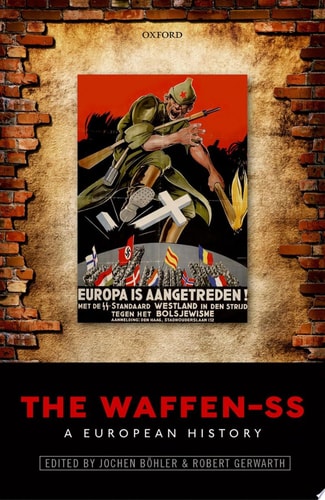
The Waffen-SS
0
0
As an Amazon Associate and affiliate partner, Menrva Books earns from qualifying purchases. Learn more
Author Description
This Is The First Systematic Pan-european Study Of The Hundreds Of Thousands Of Non-germans Who Fought — Either Voluntarily Or Under Different Kinds Of Pressures — For The Waffen-ss (or Auxiliary Police Formations Operating In The Occupied East). Building On The Findings Of Regional Studies By Other Scholars — Many Of Them Included In This Volume — The Waffen-ss Aims To Arrive At A Fuller Picture Of Those Non-german Citizens (from Eastern As Well As Western Europe) Who Served Under The Ss Flag. Where Did The Non-germans In The Ss Come From (socially, Geographically, And Culturally)? What Motivated Them? What Do We Know About The Practicalities Of International Collaboration In War And Genocide, In Terms Of Everyday Life, Language, And Ideological Training? Did A Common Transnational Identity Emerge As A Result Of Shared Ideological Convictions Or Experiences Of Extreme Violence? In Order To Address These Questions (and Others), The Waffen-ss Adopts An Approach That Does Justice To The Complexity Of The Subject, Adding A More Nuanced, Empirically Sound Understanding Of Collaboration In Europe During World War Ii, While Also Seeking To Push The Methodological Boundaries Of The Historiographical Genre Of Perpetrator Studies By Adopting A Transnational Approach.
Menrva's Summary
THE THESIS
This work investigates the motivations, backgrounds, and operational realities of the hundreds of thousands of non-Germans who served within the Waffen-SS and auxiliary police formations during World War II. Editors Robert Gerwarth and Jochen Böhler compile a series of regional studies to analyze the transnational nature of collaboration. By synthesizing empirical data from across Europe, the authors aim to move beyond national narratives to understand how ideological training and shared experiences of violence shaped these individuals.
THE SCOPE MAP
What You Will Find
- Comparative analysis of non-German recruits from both Eastern and Western Europe
- Examination of social, geographical, and cultural origins of SS volunteers and conscripts
- Investigation into the practicalities of international collaboration, including language barriers and daily life
- Methodological framework for transnational perpetrator studies
Scope Limits
- Does not focus on the internal hierarchy of the German SS leadership
- Does not provide a comprehensive military history of specific battles
THE AUTHORITY PERSPECTIVE
Scholars recognize this volume as a significant contribution to the historiography of collaboration and the transnational dimensions of the Holocaust. Readers frequently note the academic rigor and the success of the editors in synthesizing diverse regional research into a cohesive analytical framework.
Page Count:
400
Publication Date:
2016-01-01
Publisher:
Oxford University Press
ISBN-10:
0192507826
ISBN-13:
9780192507822
History
European History
Military History
World War
Community Tags
Similar Books