The Master of Ballantrae
0
0
As an Amazon Associate and affiliate partner, Menrva Books earns from qualifying purchases. Learn more
Author Description
Set in Scotland during the 1745 Jacobite Rebellion, in the exotic French Indies, and in the North American wilderness, the story has as its hero one of the most compelling yet horrifying studies of evil in nineteenth-century fiction—James Durie, Master of Ballantrae. The Master is about his infective influence—on his younger, less attractive brother Henry; on Henry's wife Alison; and on those narrators whom Stevenson so skilfully employs to present their experiences of this charming, ruthless, and evil man.
Menrva's Summary
THE PULSE
The bitter rivalry between two brothers, James and Henry Durie, unfolds against the backdrop of the 1745 Jacobite Rebellion, setting in motion a decades-long struggle for inheritance and moral survival. Driven by the charismatic yet malevolent James, the Master of Ballantrae, the narrative tracks the systematic destruction of his family and those drawn into his orbit. Henry, the younger and more stable brother, finds himself forced into a defensive posture, attempting to preserve his estate and his marriage to Alison while contending with his brother's relentless psychological and physical predation. The story utilizes a complex, multi-perspective narrative framework, primarily relayed through the observations of Ephraim Mackellar, the family steward, whose accounts provide a filtered, often biased view of the unfolding tragedy.
INSIDE THE PAGES
- Multi-perspective narrative structure
- Historical setting during the Jacobite Rebellion
- Exploration of moral ambiguity and sociopathic behavior
- Geographic shifts from Scotland to France and North America
- Epistolary elements through steward journals
- Focus on sibling rivalry and inheritance disputes
- Atmospheric gothic undertones
- Character-driven psychological conflict
THE COLLECTIVE ECHO
Discussion often centers on the effectiveness of Stevenson’s choice to use a biased narrator, which adds layers of uncertainty to the portrayal of the Master. Readers frequently highlight the stark contrast between the two brothers, noting how the author avoids simple hero-villain tropes in favor of a more nuanced examination of influence and resentment. Critics often point to the pacing, which shifts from the claustrophobic tension of the Scottish estate to the expansive, rugged environments of the wilderness. The atmosphere is consistently described as heavy and foreboding, reflecting the inescapable nature of the central conflict. Many readers appreciate the technical skill required to maintain the Master’s charm while simultaneously depicting his destructive impact on everyone around him.
Page Count:
310
Publication Date:
1983-01-01
Publisher:
Oxford Univ Pr (Trade)
ISBN-10:
019250441X
ISBN-13:
9780192504418
Historical Fiction
Adventure
Scottish literature
Historical
Classic Literature
Gothic
Genre Fiction
Community Tags
Other Editions(19)

Oxford University Press
2099
Default edition
Independently Published
2021
Independently Published
2020
Independently Published
2020

Independently Published
2020

Amazon Digital Services LLC - KDP Print US
2019
CreateSpace Independent Publishing Platform
2018

CreateSpace Independent Publishing Platform
2018

CreateSpace Independent Publishing Platform
2018

Blurb
2018

CreateSpace Independent Publishing Platform
2015
CreateSpace Independent Publishing Platform
2015

Dover Publications
2012
Adegi Graphics LLC
1999

Books on Tape
1997

Penguin UK
1996
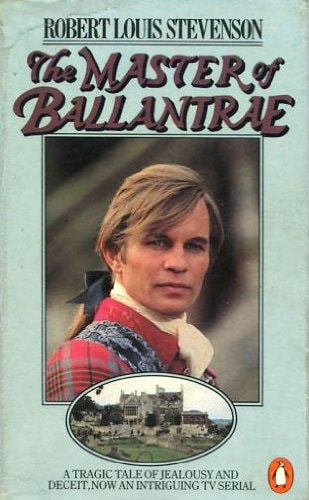
Penguin Books
1984

Oxford University Press
1983
Oxford Univ Pr (Trade)
1983
Similar Books


Reader Comments
Share Your Thoughts
No comments yet. Be the first to share your thoughts!