
The Portrait of a Lady
0
0
As an Amazon Associate and affiliate partner, Menrva Books earns from qualifying purchases. Learn more
Author Description
No, indeed. I know how one cares for her. But you must have done a great deal for her. I have taken her out with me, said Isabel, smiling still. And I have seen that she has proper clothes. Your society must have been a great benefit to her. You have talked to her, advised her, helped her to develop. Ah, yes, if she isn't the rose, she has lived near it. Isabel laughed, and her companion smiled; but there was a certain visible preoccupation in his face which interfered with complete hilarity. We all try to live as near it as we can, he said, after a moment's hesitation. Isabel turned away; Pansy was about to be restored to her, and she welcomed the diversion. We know how much she liked Lord Warburton; she thought him delightful; there was something in his friendship which appeared a kind of resource in case of indefinite need; it was like having a large balance at the bank. She felt happier when he was in the room; there was something reassuring in his approach; the sound of his voice reminded her of the beneficence of nature. Yet for all that it did not please her that he should be too near to her, that he should take too much of her good-will for granted. She was afraid of that; she averted herself from it; she wished he wouldn't. She felt that if he should come too near, as it were, it was in her to flash out and bid him keep his distance. Pansy came back to Isabel with another rent in her skirt, which was the inevitable consequence of the first, and which she displayed to Isabel with serious eyes. There were too many gentlemen in uniform; they wore those dreadful spurs, which were fatal to the dresses of young girls. It hereupon became apparent that the resources of women are innumerable. Isabel devoted herself to Pansy's desecrated drapery; she fumbled for a pin and...
Menrva's Summary
THE PULSE
Isabel Archer, a spirited and independent young American woman, finds her quest for personal freedom and autonomy compromised by the manipulative social structures and complex interpersonal dynamics of European high society. After inheriting a substantial fortune, Isabel travels to Europe, where she encounters various suitors and mentors who attempt to shape her destiny. She must navigate the conflicting pressures of societal expectations, romantic entanglements, and the subtle machinations of those she trusts. The narrative employs a third-person limited perspective, focusing heavily on the internal psychological development of the protagonist as she confronts the consequences of her choices. The world is defined by the rigid social hierarchies of the late nineteenth-century transatlantic elite, where wealth and status dictate the boundaries of individual agency.
INSIDE THE PAGES
- Extensive use of internal monologue to track character development
- Focus on the contrast between American idealism and European cynicism
- Exploration of the theme of personal liberty versus social obligation
- Intricate dialogue that reveals hidden motives and social posturing
- Detailed descriptions of European settings as reflections of character states
- Examination of the power dynamics within marriage and courtship
- Use of irony to highlight the protagonist's naivety and eventual disillusionment
- Gradual pacing that emphasizes psychological shifts over external action
THE COLLECTIVE ECHO
Readers and critics frequently highlight the precision of the prose and the depth of the character studies presented throughout the narrative. Discussion often centers on the tragic arc of Isabel Archer and the moral ambiguity of the supporting cast who surround her. Many observers note that the pacing is deliberate, favoring intellectual engagement and psychological nuance over rapid plot progression. The effectiveness of the atmospheric world-building is often cited as a key element that grounds the abstract themes of freedom and betrayal in a tangible reality. This work remains a central point of analysis for those interested in the evolution of the psychological novel and the complexities of the human condition.
Page Count:
676
Publication Date:
1947-01-01
Publisher:
1947)
ISBN-10:
0192505092
ISBN-13:
9780192505095
Classic Literature
Realism
Victorian
Psychological
Community Tags
Other Editions(62)

Phoemixx Classics Ebooks
2021
Default edition
Independently Published
2021

Independently Published
2020

Independently Published
2020

Independently Published
2020

Independently Published
2020

Independently Published
2020

Amazon Digital Services LLC - KDP Print US
2020

Independently Published
2020

iBoo Press House
2020

Independently Published
2020

Independently Published
2020
Independently Published
2019

Spuyten Duyvil Publishing
2019

Dreamscape Media
2018

CreateSpace Independent Publishing Platform
2017
CreateSpace Independent Publishing Platform
2017

CreateSpace Independent Publishing Platform
2017

CreateSpace Independent Publishing Platform
2017

CreateSpace Independent Publishing Platform
2017

Independently Published
2017

CreateSpace Independent Publishing Platform
2017

CreateSpace Independent Publishing Platform
2017

CreateSpace Independent Publishing Platform
2016

CreateSpace Independent Publishing Platform
2016

CreateSpace Independent Publishing Platform
2016

CreateSpace Independent Publishing Platform
2016

CreateSpace Independent Publishing Platform
2015

CreateSpace Independent Publishing Platform
2015

CreateSpace Independent Publishing Platform
2015

AudioGO
2014

Penguin Random House
2009
Baker & Taylor, CATS
2009
Oxford University Press
2009

Wilder Publications, Incorporated
2008
Penguin Group USA, Inc.
2008

ReadHowYouWant.com, Limited
2007

IndyPublish.com
2007
North Books
2007
Oxford University Press
1999

Addison-Wesley Longman, Limited
1999

Chivers Press
1998

Penguin Books Australia
1997

Penguin
1997
Penguin Books
1997
NewStar Media, Incorporated
1996

Barnes & Noble Books
1996

Turtleback
1996
State Street Press
1996
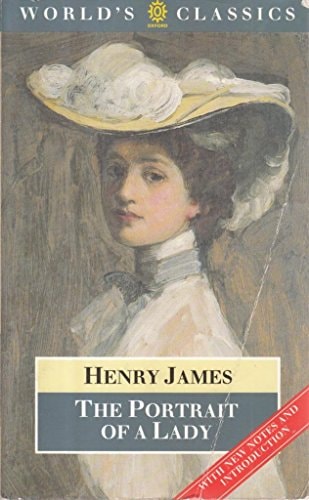
Oxford University Press
1995
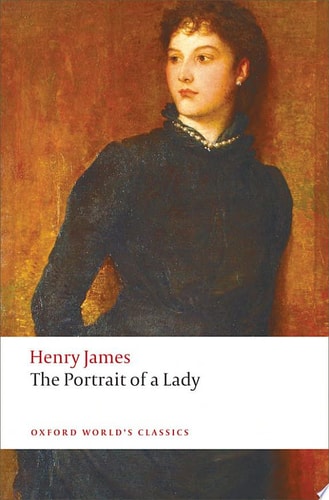
Oxford University Press, Uk
1995
Signet Classic
1995

Everyman
1995

Buccaneer Books, Incorporated
1990

Bantam Classics
1983

Penguin Books
1968
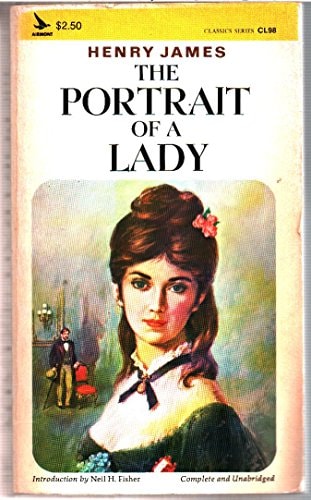
Airmont
1966
1947)
1947

Huge Print Press
1930

Huge Print Press
1891

Huge Print Press
1881

Huge Print Press
1880
Similar Books

Reader Comments
Share Your Thoughts
No comments yet. Be the first to share your thoughts!