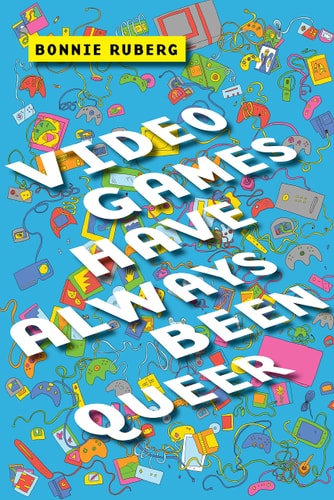
Video Games Have Always Been Queer
0
0
As an Amazon Associate and affiliate partner, Menrva Books earns from qualifying purchases. Learn more
Author Description
While popular discussions about queerness in video games often focus on big-name, mainstream games that feature LGBTQ characters, like Mass Effect or Dragon Age, Bonnie Ruberg pushes the concept of queerness in games beyond a matter of representation, exploring how video games can be played, interpreted, and designed queerly, whether or not they include overtly LGBTQ content. Video Games Have Always Been Queer argues that the medium of video games itself can—and should—be read queerly. In the first book dedicated to bridging game studies and queer theory, Ruberg resists the common, reductive narrative that games are only now becoming more diverse. Revealing what reading D. A. Miller can bring to the popular 2007 video game Portal, or what Eve Sedgwick offers Pong, Ruberg models the ways game worlds offer players the opportunity to explore queer experience, affect, and desire. As players attempt to 'pass' in Octodad or explore the pleasure of failure in Burnout: Revenge, Ruberg asserts that, even within a dominant gaming culture that has proved to be openly hostile to those perceived as different, queer people have always belonged in video games—because video games have, in fact, always been queer.
Menrva's Summary
THE THESIS
Video games, often perceived as a bastion of heteronormativity, have always possessed an inherent queerness. This book argues that queerness in video games extends beyond the mere inclusion of LGBTQ characters, delving into how the very act of playing, interpreting, and designing games can be queer. By examining classic and contemporary games through the lens of queer theory, the author reveals how players have historically found spaces for queer experience, affect, and desire within the medium, even amidst a hostile gaming culture.
THE SCOPE MAP
- Analysis of queer potential in video games beyond explicit representation.
- Application of queer theory to game studies, bridging academic fields.
- Close readings of games like Portal, Pong, Octodad, and Burnout: Revenge.
- Exploration of queer experience, affect, and desire through gameplay.
- Discussion of 'passing' and the 'pleasure of failure' as queer mechanics.
- Critique of the reductive narrative that games are only recently becoming diverse.
- Examination of how dominant gaming culture has historically excluded queer individuals.
THE AUTHORITY PERSPECTIVE
This work is recognized for its innovative approach to understanding video games through the lens of queer theory, moving beyond simple character representation to explore the inherent queerness within the medium itself. It has been noted for its insightful readings of various games, demonstrating how gameplay mechanics and player interpretation can foster queer experiences. The book is praised for bridging academic disciplines and offering a new framework for analyzing digital culture. Its argument that video games have always been queer, even within historically hostile environments, provides a significant contribution to both game studies and queer theory.
Page Count:
288
Publication Date:
2019-03-19
Publisher:
NYU Press
ISBN-10:
1479843741
ISBN-13:
9781479843749
Philosophy
Non-Fiction
Art
Media Studies
Game Studies
Queer Studies
Community Tags
Similar Books