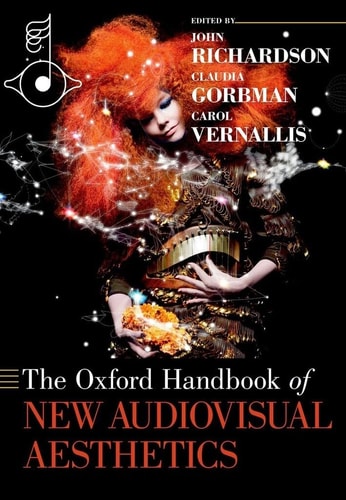
The Oxford Handbook of New Audiovisual Aesthetics
0
0
As an Amazon Associate and affiliate partner, Menrva Books earns from qualifying purchases. Learn more
Author Description
This handbook offers new ways to read the audiovisual. In the media landscapes of today, conglomerates jockey for primacy and the internet increasingly places media in the hands of individuals-producing the range of phenomena from movie blockbuster to YouTube aesthetics. Media forms and genres are proliferating and interpenetrating, from movies, music and other entertainments streaming on computers and iPods to video games and wireless phones. The audiovisual environment of everyday life, too-from street to stadium to classroom-would at times be hardly recognizable to the mid-twentieth-century subject. The Oxford Handbook of New Audiovisual Aesthetics provides powerful ways to understand these changes.Earlier approaches tended to consider sound and music as secondary to image and narrative. These remained popular even as practices from theater, cinema and television migrated across media. However, the traversal, or "remediation," from one medium to another has also provided practitioners and audiences the chance to rewrite the rules of the audiovisual contract. Whether viewed from the vantage of televised mainstream culture, the Hollywood film industry, the cinematic avant-garde, or the participatory discourses of "cyberspace," audiovisual expression has changed dramatically.The book provides a definitive cross-section of current ways of thinking about sound and image. Its authors-leading scholars and promising younger ones, audiovisual practitioners and non-academic writers (both mainstream and independent)- open the discussion on audiovisual aesthetics in new directions. Our contributors come from fields including film, visual arts, new media, cultural theory, and sound and music studies, and they draw variously from economic, political, institutional, psychoanalytic, genre-based, auteurist, internationalist, reception-focused, technological, and cultural approaches to questions concerning today's sound and image. All consider the aural dimension, and what Michel
Menrva's Summary
THE THESIS
This handbook investigates how the rapid evolution of digital media and the convergence of sound and image have necessitated new analytical frameworks for understanding contemporary audiovisual aesthetics. The editors, Carol Vernallis, Claudia Gorbman, and John Richardson, curate a collection of essays from leading scholars and practitioners to address the shift from traditional cinema-centric models to a broader, more fluid media landscape. By synthesizing diverse methodologies—ranging from psychoanalytic to technological and economic approaches—the text argues that the traditional hierarchy, which often relegated sound to a secondary role, is no longer sufficient for interpreting modern media consumption.
THE SCOPE MAP
What You Will Find
- Analysis of media convergence across platforms including film, video games, streaming services, and mobile devices.
- Theoretical frameworks for examining the remediation of audiovisual content.
- Interdisciplinary perspectives on the relationship between sound, music, and visual narrative.
- Case studies covering mainstream Hollywood, cinematic avant-garde, and participatory digital cultures.
Scope Limits
- The text does not provide a historical survey of pre-twentieth-century audiovisual forms.
- It does not offer a technical manual for media production or software operation.
THE AUTHORITY PERSPECTIVE
Experts identify this volume as a foundational reference for students and researchers in film and media studies who seek to understand the complexities of modern audiovisual culture. Readers frequently note the academic density of the prose, which reflects the high level of theoretical rigor maintained by the contributors throughout the collection.
Page Count:
752
Publication Date:
2015-04-01
Publisher:
Oxford University Press
ISBN-10:
0190244593
ISBN-13:
9780190244590
Philosophy
Media Studies
Musicology
Film Theory
Digital Media
Audiovisual Aesthetics
Humanities
Mass media
Community Tags
Other Editions(2)
Similar Books

Reader Comments
Share Your Thoughts
No comments yet. Be the first to share your thoughts!