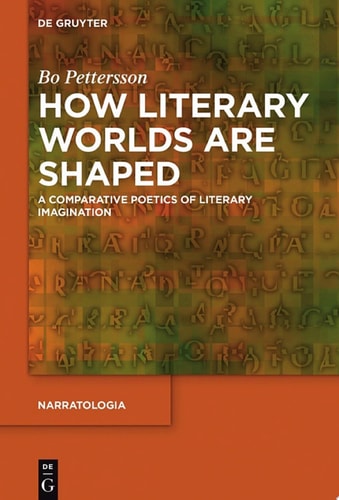
How Literary Worlds Are Shaped
0
0
As an Amazon Associate and affiliate partner, Menrva Books earns from qualifying purchases. Learn more
Author Description
Literary studies still lack an extensive comparative analysis of different kinds of literature, including ancient and non-Western. How Literary Worlds Are Shaped. A Comparative Poetics of Literary Imagination aims to provide such a study. Literature, it claims, is based on individual and shared human imagination, which creates literary worlds that blend the real and the fantastic, mimesis and genre, often modulated by different kinds of unreliability. The main building blocks of literary worlds are their oral, visual and written modes and three themes: challenge, perception and relation. They are blended and inflected in different ways by combinations of narratives and figures, indirection, thwarted aspirations, meta-usages, hypothetical action as well as hierarchies and blends of genres and text types. Moreover, literary worlds are not only constructed by humans but also shape their lives and reinforce their sense of wonder. Finally, ten reasons are given in order to show how this comparative view can be of use in literary studies. In sum, How Literary Worlds Are Shaped is the first study to present a wide-ranging and detailed comparative account of the makings of literary worlds.
Menrva's Summary
THE THESIS
This book provides a comparative poetics of literary imagination, analyzing how human imagination constructs literary worlds. The study posits that literature is founded on individual and shared imagination, which generates worlds that merge the real and the fantastic, mimesis and genre, often through various forms of unreliability. It identifies oral, visual, and written modes, alongside themes of challenge, perception, and relation, as the core components of these worlds. These elements are intricately blended and modulated by narrative structures, figures of speech, indirect communication, thwarted ambitions, meta-commentary, hypothetical actions, and genre hierarchies, ultimately shaping human lives and fostering a sense of wonder.
THE SCOPE MAP
- Comparative analysis of ancient and non-Western literature alongside modern traditions.
- Exploration of literary worlds as constructs of human imagination, blending reality and fantasy.
- Identification of oral, visual, and written modes as fundamental building blocks of literary worlds.
- Analysis of three core themes: challenge, perception, and relation, within literary constructs.
- Examination of narrative techniques, figures, indirection, and meta-usages in world-building.
- Discussion of how literary worlds shape human lives and reinforce a sense of wonder.
- Presentation of ten reasons for the utility of this comparative approach in literary studies.
THE AUTHORITY PERSPECTIVE
The book presents itself as the first comprehensive comparative account of how literary worlds are made, addressing a perceived gap in literary studies. It aims to offer a detailed analysis that integrates ancient and non-Western traditions with contemporary approaches. The work's theoretical framework is built upon the concept of human imagination as the primary source for literary world creation, blending elements of mimesis and genre. The author outlines specific components and themes that constitute these worlds, suggesting a systematic method for their analysis.
Page Count:
334
Publication Date:
2016-09-12
Publisher:
De Gruyter
ISBN-10:
3110484935
ISBN-13:
9783110484939
Non-Fiction
Poetics
Comparative
Imagination
Literary theory
Literary Criticism
Community Tags
Similar Books