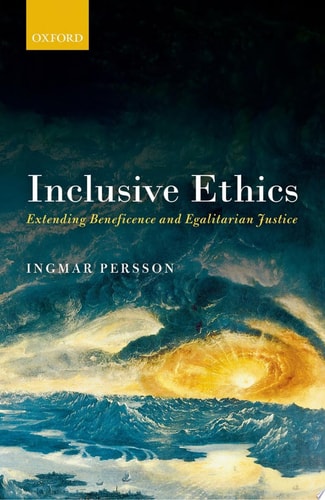
Inclusive Ethics
0
0
As an Amazon Associate and affiliate partner, Menrva Books earns from qualifying purchases. Learn more
Author Description
Inclusive Ethics Begins From Two Ideas Which Are Part Of Our Everyday Morality, Namely That We Have A Moral Reason To Benefit Or Do Good To Other Beings, And That Justice Requires These Benefits To Be Distributed Equally. A Morality Comprising These Two General Principles Will Be Exceedingly Hard To Apply As These Principles Will Have To Be Balanced Against Each In An Intuitive Fashion, But Also Because The Notion Of What Benefits Beings Is Quite Complex, Comprising Both Experiential Components Of Pleasure And Successful Exercises Of Autonomy. Ingmar Persson Argues That, On Philosophical Reflection, These Ideas Turn Out To Be More Far-reaching Than We Imagine. In Particular, The Reason To Benefit Commits Us To Benefit Beings By Bringing Them Into Existence. Further, Since Grounds That Are Commonly Used To Justify That Some Are Better Off Than Others - Such As Their Being More Deserving Or Having Rights To More - Are Untenable, Justice Requires A More Extensive Equality. The Book Concludes By Reflecting On The Problems Of Getting People To Accept A Morality Which Differs Markedly From The Morality With Which They Have Grown Up.
Menrva's Summary
THE THESIS
This book investigates the logical implications of two foundational moral principles: the obligation to benefit others and the requirement for equal distribution of those benefits. Ingmar Persson, a philosopher specializing in ethics, utilizes rigorous analytical methods to examine how these everyday moral intuitions demand more radical applications than typically acknowledged. By deconstructing common justifications for inequality, the author argues that these principles necessitate a commitment to both procreative ethics and a more expansive interpretation of social equality.
THE SCOPE MAP
What You Will Find
- An analysis of the tension between beneficence and egalitarian justice.
- A philosophical examination of what constitutes a benefit, including pleasure and autonomy.
- Arguments regarding the moral obligation to bring new beings into existence.
- Critiques of traditional justifications for merit-based or rights-based inequality.
Scope Limits
- The text does not provide a practical policy manual or a step-by-step guide for societal implementation.
- It does not focus on theological or religious foundations of morality, remaining strictly within secular philosophical discourse.
THE AUTHORITY PERSPECTIVE
Experts in moral philosophy recognize this work as a dense, systematic contribution to contemporary ethical theory. Readers frequently note that the prose requires significant philosophical background to fully grasp the nuances of the author's arguments regarding population ethics and distributive justice.
Page Count:
288
Publication Date:
2017-01-01
Publisher:
Oxford University Press
ISBN-10:
0192510614
ISBN-13:
9780192510617
Philosophy
Moral Philosophy
Political Philosophy
Ethics
Social justice
Community Tags
Similar Books