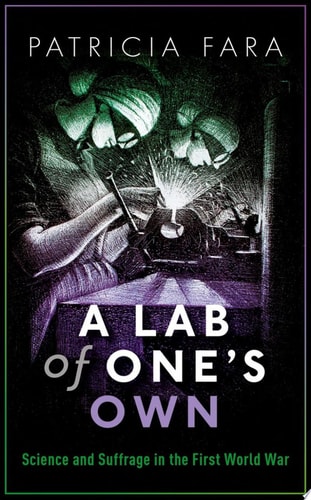
A Lab of One's Own
0
0
As an Amazon Associate and affiliate partner, Menrva Books earns from qualifying purchases. Learn more
Author Description
Many Extraordinary Female Scientists, Doctors, And Engineers Tasted Independence And Responsibility For The First Time During The First World War. How Did This Happen? Patricia Fara Reveals How Suffragists, Such As Virginia Woolf's Sister, Ray Strachey, Had Already Aligned Themselves With Scientific And Technological Progress, And That During The Dark Years Of War They Mobilized Women To Enter Conventionally Male Domains Such As Science And Medicine. Fara Tells The Stories Of Women Such As: Mental Health Pioneer Isabel Emslie, Chemist Martha Whiteley, A Co-inventor Of Tear Gas, And Botanist Helen Gwynne Vaughan. Women Were Now Carrying Out Vital Research In Many Aspects Of Science, But Could It Last? Though Suffragist Millicent Fawcett Declared Triumphantly That 'the War Revolutionised The Industrial Position Of Women. It Found Them Serfs, And Left Them Free', The Outcome Was Very Different. Although Women Had Helped The Country To Victory And Won The Vote For Those Over Thirty, They Had Lost The Battle For Equality. Men Returning From The Front Reclaimed Their Jobs, And Conventional Hierarchies Were Re-established Even Though The Nation Now Knew That Women Were Fully Capable Of Performing Work Traditionally Reserved For Men. Fara Examines How The Bravery Of These Pioneer Women Scientists, Temporarily Allowed Into A Closed World Before The Door Clanged Shut Again, Paved The Way For Today's Women Scientists. Yet, Inherited Prejudices Continue To Limit Women's Scientific Opportunities.
Menrva's Summary
THE THESIS
This book investigates how the First World War temporarily dismantled gender barriers in science and medicine, only for those gains to be systematically reversed in the post-war era. Patricia Fara, a historian of science, utilizes archival records and biographical accounts to examine the intersection of the suffrage movement and scientific professionalization. She argues that while the war provided a unique window of opportunity for women to demonstrate their technical competence, the structural re-establishment of patriarchal hierarchies prevented lasting institutional change.
THE SCOPE MAP
What You Will Find
- Biographical profiles of figures such as Isabel Emslie, Martha Whiteley, and Helen Gwynne Vaughan.
- Analysis of the relationship between the suffrage movement and scientific progress.
- Examination of post-war labor dynamics and the displacement of female professionals by returning male veterans.
Scope Limits
- The text focuses primarily on the British experience during and immediately following the First World War.
- It does not provide a comprehensive history of women in science beyond the early 20th-century context.
THE AUTHORITY PERSPECTIVE
Historians and reviewers note the book's success in highlighting overlooked contributions of female scientists during a period of national crisis. Scholars frequently cite the text for its clear articulation of how institutional prejudice persists even when individual capability is proven.
Page Count:
304
Publication Date:
2018-01-01
Publisher:
Oxford University Press
ISBN-10:
0192514164
ISBN-13:
9780192514165
Biography
History
Science
Social History
World War
Womens Studies
Community Tags
Similar Books