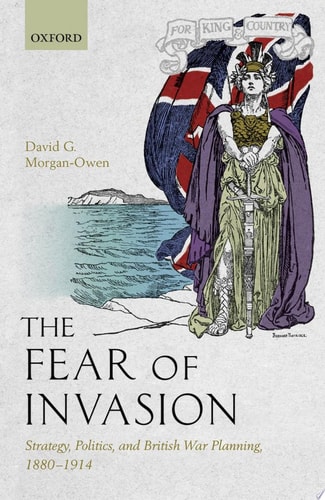
The Fear of Invasion
0
0
As an Amazon Associate and affiliate partner, Menrva Books earns from qualifying purchases. Learn more
Author Description
The Fear Of Invasion Presents A New Interpretation Of British Preparation For War Before 1914. It Argues That Protecting The British Isles From Invasion Was The Foundation Upon Which All Other Plans For The Defence Of The Empire Were Built Up. Home Defence Determined The Amount Of Resources Available For Other Tasks And The Relative Focus Of The Army And Navy, As Both Played An Important Role In Preventing An Invasion. As Politicians Were Reluctant To Prepare For Offensive British Participation In A Future War, Home Defence Became The Means By Which The Government Contributed To An Ill-defined British 'grand' Strategy. The Royal Navy Formed The Backbone Of British Defensive Preparations. However, After 1905 The Navy Came To View The Threat Of A German Invasion Of The British Isles As A Far More Credible Threat Than Is Commonly Realised. As The Army Became More Closely Associated With Operations In France, The Navy Thus Devoted An Ever-greater Amount Of Time And Effort To Safeguarding The Vulnerable East Coast. In This Manner Preventing An Invasion Came To Exert A 'very Insidious' Effect On The Navy By The Outbreak Of War In 1914. This Book Explains How And Why This Came To Pass, And What It Can Tell Us About The Role Of Government In Forming Strategy.
Menrva's Summary
THE THESIS
This book investigates how the perceived threat of invasion shaped British strategic planning and resource allocation in the decade preceding the First World War. David G. Morgan-Owen, a specialist in naval and military history, utilizes archival government and military records to challenge existing interpretations of British pre-war strategy. He argues that home defense was not merely a secondary concern but the foundational pillar that dictated the operational capabilities and limitations of both the British Army and the Royal Navy.
THE SCOPE MAP
What You Will Find
- Analysis of British strategic planning between 1905 and 1914
- Examination of the inter-service tensions between the Army and the Royal Navy regarding coastal defense
- Assessment of the political constraints on British offensive military participation
- Evaluation of the German invasion threat as perceived by contemporary naval leadership
Scope Limits
- The study focuses primarily on the British Isles and does not provide an exhaustive account of colonial defense strategies outside the context of home security
- The narrative concludes at the outbreak of war in 1914 and does not analyze the execution of these plans during the conflict itself
THE AUTHORITY PERSPECTIVE
Historians and military scholars recognize this work as a significant contribution to the understanding of Edwardian-era strategic policy. Readers frequently note the academic density of the prose and the author's meticulous use of primary source documentation to support his arguments.
Page Count:
272
Publication Date:
2017-01-01
Publisher:
Oxford University Press
ISBN-10:
0192527584
ISBN-13:
9780192527585
History
Naval history
World War
Military History
Political History
British History
Community Tags
Similar Books