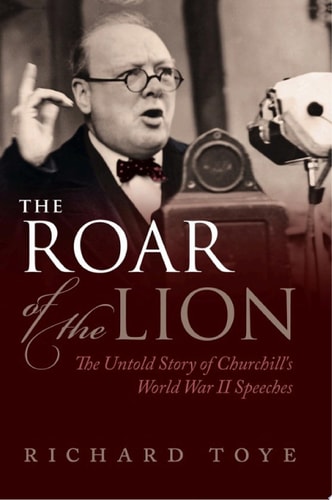
The Roar of the Lion: The Untold Story of Churchill's World War II Speeches
0
0
As an Amazon Associate and affiliate partner, Menrva Books earns from qualifying purchases. Learn more
Author Description
'My aunt, listening to the Prime Minister's speech, remarked of "our greatest orator", "He's no speaker, is he?"' -diary of teacher M.A. Pratt, 11 Nov. 1942. The popular story of Churchill's war-time rhetoric is a simple one: the British people were energized and inspired by his speeches, which were almost universally admired and played an important role in the ultimate victory over Nazi Germany. Richard Toye now re-examines this accepted national story - and gives it a radical new spin. Using survey evidence and the diaries of ordinary people, he shows how reactions to Churchill's speeches at the time were often very different from what we have always been led to expect. His first speeches as Prime Minister in the dark days of 1940 were by no means universally acclaimed - indeed, many people thought that he was drunk during his famous 'finest hour' broadcast - and there is little evidence that they made a decisive difference to the British people's will to fight on. In actual fact, as Toye shows, mass enthusiasm sat side-by-side with considerable criticism and dissent from ordinary people. Yes, there were speeches that stimulated, invigorated, and excited many. But there were also speeches which caused depression and disappointment in many others, and which sometimes led to workplace or family arguments. Yet this more complex reality has been consistently obscured from the historical record by the overwhelming power of a treasured national myth. The first systematic, archive based examination of Churchill's World War II rhetoric as a whole, The Roar of the Lion considers his oratory not merely as a series of 'great speeches', but as calculated political interventions which had diplomatic repercussions far beyond the effect on the morale of listeners in Britain. Considering his failures as well as his successes, the book moves beyond the purely celebratory tone of much of the existing literature. It offers new insight into how the speeches were written and delivere
Menrva's Summary
THE THESIS
This book investigates the discrepancy between the established national myth of Winston Churchill as a universally inspiring orator and the contemporary reality of public reception to his wartime speeches. Richard Toye, a historian specializing in British political history, utilizes archival research, personal diaries, and contemporary survey data to challenge the traditional narrative. He argues that Churchill's rhetoric was often met with skepticism, indifference, or criticism, and that these speeches functioned as calculated political maneuvers rather than purely morale-boosting addresses.
THE SCOPE MAP
What You Will Find
- Analysis of public opinion through Mass Observation surveys and private diaries from 1940-1945.
- Examination of the drafting and delivery processes behind Churchill's major broadcasts.
- Assessment of the diplomatic consequences of specific speeches beyond the domestic British audience.
Scope Limits
- The text does not provide a comprehensive biography of Churchill's entire life or career.
- It does not focus on military strategy or battlefield tactics except where they intersect with political rhetoric.
THE AUTHORITY PERSPECTIVE
Historians and scholars recognize this work as a significant corrective to the hagiographic tradition surrounding Churchill's wartime leadership. Readers frequently note the academic rigor and the effective use of primary source material to dismantle long-standing historical assumptions.
Page Count:
320
Publication Date:
2013-01-01
Publisher:
OUP Oxford
ISBN-10:
0191664065
ISBN-13:
9780191664069
Biography
History
World War
Rhetoric
Military History
British History
Community Tags
Similar Books