Cyclops: The Myth and Its Cultural History
0
0
As an Amazon Associate and affiliate partner, Menrva Books earns from qualifying purchases. Learn more
Author Description
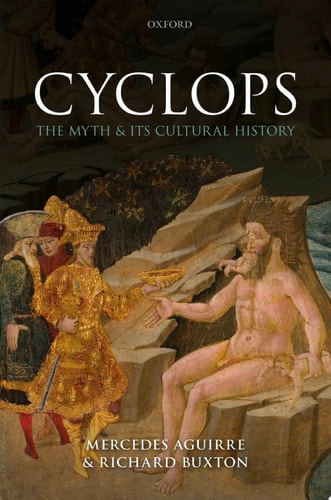
A Cyclops is popularly assumed to be nothing more than a flesh-eating, one-eyed monster. In an accessible, stylish, and academically authoritative investigation, this book seeks to demonstrate that there is far more to it than that - quite apart from the fact that in myths the Cyclopes are not always one-eyed! This book provides a detailed, innovative, and richly illustrated study of the myths relating to the Cyclopes from classical antiquity until the present day. The first part is organised thematically: after discussing various competing scholarly approaches to the myths, the authors analyse ancient accounts and images of the Cyclopes in relation to landscape, physique (especially eyes, monstrosity, and hairiness), lifestyle, gods, names, love, and song. While the man-eating Cyclops Polyphemus, famous already in the Odyssey, plays a major part, so also do the Cyclopes who did monumental building work, as well as those who toiled as blacksmiths. The second part of the book concentrates on the post-classical reception of the myths, including medieval allegory, Renaissance grottoes, poetry, drama, the visual arts, contemporary painting and sculpture, film, and even a circus performance. This book aims to explore not just the perennial appeal of the Cyclopes as fearsome monsters, but the depth and subtlety of their mythology which raises complex issues of thought and emotion.
Menrva's Summary
THE THESIS
This book investigates the multifaceted nature of the Cyclops myth, challenging the reductive view of these figures as merely one-eyed, flesh-eating monsters. Authors Mercedes Aguirre and Richard Buxton utilize a combination of classical scholarship and cultural analysis to demonstrate that the Cyclopes represent a complex array of roles in antiquity, ranging from monumental builders to divine blacksmiths, while tracing their evolution through post-classical reception.
THE SCOPE MAP
What You Will Find
- A thematic analysis of ancient accounts and iconography regarding physique, landscape, and lifestyle.
- A comprehensive survey of post-classical reception including medieval allegory, Renaissance art, and modern media.
- An examination of the diverse roles of Cyclopes, including the blacksmiths and builders alongside the famous Polyphemus.
Scope Limits
- The text focuses primarily on the Western tradition of the myth and does not provide an exhaustive global survey of one-eyed creature folklore.
THE AUTHORITY PERSPECTIVE
Experts and scholars frequently cite this work as a definitive, interdisciplinary study that successfully bridges the gap between classical philology and cultural history. Readers note the academic rigor of the research while appreciating the accessible prose that makes complex mythological analysis available to a broader audience.
Page Count:
456
Publication Date:
2020-01-01
Publisher:
OUP Oxford
ISBN-10:
0192524429
ISBN-13:
9780192524423
Religion
Mythology
Literary Criticism
Art History
Cultural History
Community Tags
Similar Books