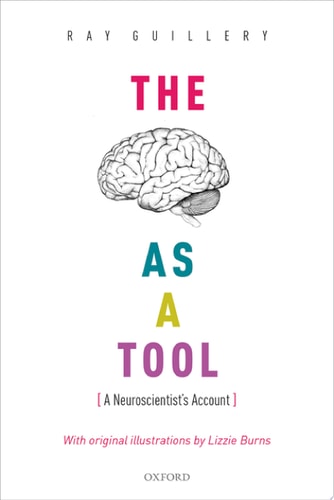
The Brain As A Tool
0
0
As an Amazon Associate and affiliate partner, Menrva Books earns from qualifying purchases. Learn more
Author Description
There Are Two Distinct Views About The Functions Of Our Brains And Their Origins. The Standard View, Taught In Most Neuroscience Texts, Has Incoming Messages About The World Sent To The Cerebral Cortex, With The Cortex Then Producing An Appropriate Motor Output. The Interactive View, Largely Expressed By Philosophers And Psychologists, Stresses The Continuous Sensorimotor Interactions Of The Brain With The World. The Brain As A Tool Focuses On Thalamo-cortical Interactions On The Basis Of The Interactive View, Exploring The Phylogenetically New Transthalamic Corticocortical Pathways Of Mammals That Link A Hierarchy Of Cortical Areas To Each Other And Back To The Phylogenetically Older Motor Centres For Control Of Action. The Book Demonstrates How Messages In These Pathways Produce An Anticipation Of Our Own Actions And Perceptions. In Relating Neural Events To Conscious Processing And Our Sense Of Self, Guillery Summarizes Important Evidence Which Links Neuroscience With Psychology And Philosophy. This Book Is Essential Reading For Neuroscientists, Cognitive Psychologists And Philosophers. Supplemented With A Helpful Glossary Of Neural Terms And Numerous Illustrations Of The Brain, It Is Also An Important Resource For Graduate And Postdoctoral Students Interested In The Neural Bases Of A Sense Of Self And Of Cognitive Functions.
Menrva's Summary
THE THESIS
This book investigates the fundamental question of how the brain functions as a tool for sensorimotor interaction rather than merely a passive processor of incoming sensory data. Ray Guillery, a distinguished neuroscientist, challenges the standard model of brain function by proposing an interactive view that emphasizes the continuous loop between perception and motor output. By focusing on thalamo-cortical interactions, the author provides a framework that bridges the gap between biological neural pathways and the philosophical concepts of consciousness and self-identity.
THE SCOPE MAP
What You Will Find
- Detailed analysis of phylogenetically new transthalamic corticocortical pathways in mammals.
- Examination of the hierarchy of cortical areas and their connection to older motor centers.
- Integration of neuroscientific data with psychological and philosophical theories of perception.
- A glossary of specialized neural terminology and anatomical illustrations of the brain.
Scope Limits
- The text does not provide a comprehensive history of all neuroscientific theories.
- It does not cover clinical pathology or specific neurological disorders in depth.
THE AUTHORITY PERSPECTIVE
Experts and academics recognize this work as a significant contribution to the study of neural architecture and its relation to cognitive processing. Readers frequently note the technical density of the prose, which makes the text most suitable for graduate students and researchers in the fields of neuroscience and philosophy.
Page Count:
288
Publication Date:
2017-01-01
Publisher:
Oxford University Press
ISBN-10:
0192529536
ISBN-13:
9780192529534
Science
Neuroscience
Cognitive Psychology
Biology
Philosophy of
Community Tags
Similar Books