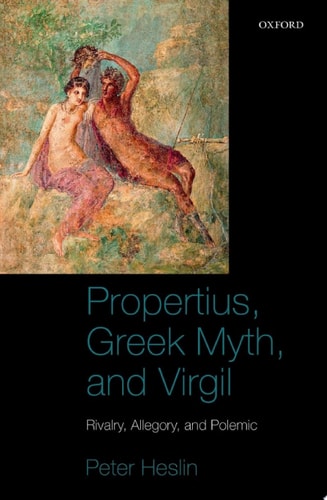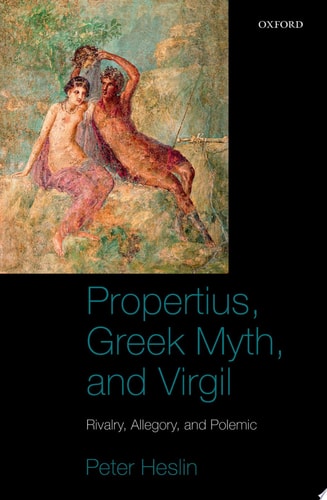
Propertius, Greek Myth, and Virgil
0
0
As an Amazon Associate and affiliate partner, Menrva Books earns from qualifying purchases. Learn more
Author Description
This Volume Offers A Strikingly Innovative Account Of Propertius' Relationship With Virgil, Positing A Keen Rivalry Between Two Of The Greatest Poets Of Latin Literature, Contemporaries Within The Circle Of Maecenas. It Begins By Examining All Of The References To Greek Mythology In Propertius' First Book; These Passages Emerge As Strongly Intertextual In Nature, Providing A Way For The Poet To Situate Himself With Respect To His Predecessors, Both Greek And Roman. More Specifically, Myth Is Also The Medium Of A Sustained Polemic With Virgil's Eclogues, Published Only A Few Years Earlier. Virgil's Response Can Be Traced In The Georgics, And Subsequently, In His Second And Third Books, Propertius Continued To Use Mythology And Its Relationship To Contemporary Events As A Vehicle For Literary Polemic. This Volume Argues That Their Competition Can Be Seen As Exemplifying A Revised Model For How The Poets Within Maecenas' Circle Interacted And Engaged With Each Other's Work - A Model Based On Rivalry Rather Than Ideological Adhesion Or Subversion - While Also Painting A Revealing Picture Of How Virgil Was Viewed By A Contemporary In The Days Before His Death Had Canonized His Work As An Instant Classic. In Particular, Its Novel Interpretation Offers Us A New Understanding Of Propertius, One Of The Foundational Figures In Western Love Poetry, And How His Frequent References To Other Poets, Especially Gallus And Ennius, Take On New Meanings When Interpreted As Responses To Virgil's Changing Career.
Menrva's Summary
THE THESIS
This volume investigates the literary rivalry between the Roman poets Propertius and Virgil, questioning how their competitive engagement with Greek mythology shaped their respective poetic outputs. Peter J. Heslin, a scholar of Latin literature, utilizes a close reading of Propertius' early books alongside Virgil's Eclogues and Georgics to argue that their relationship was defined by professional competition rather than mere ideological alignment. By analyzing intertextual references to mythology, the author reconstructs the dynamic environment of Maecenas' literary circle.
THE SCOPE MAP
What You Will Find
- A comprehensive analysis of Greek mythological references in Propertius' first book.
- A comparative study of intertextuality between Propertius and Virgil's Eclogues and Georgics.
- An examination of the influence of Gallus and Ennius on the development of Propertian love poetry.
Scope Limits
- The analysis does not cover the entirety of Propertius' later works or the full breadth of Virgil's Aeneid.
- The study focuses primarily on the specific context of the Maecenas circle rather than the broader socio-political history of the Augustan age.
THE AUTHORITY PERSPECTIVE
Scholars frequently cite this work for its rigorous methodology in tracing intertextual polemics within Latin poetry. Experts highlight the text as a significant contribution to understanding the competitive nature of Roman literary circles before Virgil's canonization.
Page Count:
319
Publication Date:
2018-01-01
Publisher:
Oxford University Press,
ISBN-10:
0192524291
ISBN-13:
9780192524294
History
Poetry
Latin poetry
Literary Criticism
In literature
Latin
Community Tags
Similar Books