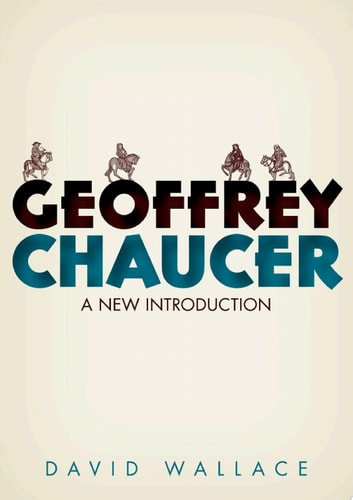
Geoffrey Chaucer: A New Introduction
0
0
As an Amazon Associate and affiliate partner, Menrva Books earns from qualifying purchases. Learn more
Author Description
Originally writing over 600 years ago, Geoffrey Chaucer is today enjoying a global renaissance. Why do poets, translators, and audiences from so many cultures, from the mountains of Iran to the islands of Japan, find Chaucer so inspiring? In part this is down to the character and sheer inventiveness of Chaucer's work. At the time Chaucer's writings were not just literary adventures, but also a means of convincing the world that poetry and science, tragedy and astrology, could all be explored through the English language. French was still England's aristocratic language of choice when Chaucer was born; Latin was used for university education, theological discussion, and for burying the dead. Could a hybrid tongue such as English ever generate great writing to compare with French and Italian? Chaucer, miraculously, believed that it could, through gradual expansion of expressiveness and scientific precision. He was never paid to do this; he was valued, rather, as a capable civil servant, regulating the export of wool and the building of seating for royal tournaments. Such experiences, however, fed his writing, achieving a range of social registers, from noble tragedy to barnyard farce, unrivalled for centuries. His tale-telling geography is vast, his fascination with varieties of religious belief endless, and his desire to voice female experience especially remarkable. Many Chaucerian poets and performers, today, are women. In this book David Wallace introduces the life, performance, and poetry of Chaucer, and analyses his astonishing and enduring appeal.
Menrva's Summary
THE THESIS
This book investigates the enduring global appeal of Geoffrey Chaucer and his role in establishing the English language as a medium for sophisticated literary, scientific, and philosophical expression. David Wallace, a scholar of medieval literature, examines Chaucer's dual life as a pragmatic civil servant and a pioneering poet. He argues that Chaucer's unique position within the social and linguistic hierarchies of 14th-century England allowed him to synthesize diverse registers, from courtly tragedy to common farce. The text explores how these experiences informed his ability to expand the expressive range of English, ultimately challenging the dominance of French and Latin.
THE SCOPE MAP
What You Will Find
- An analysis of Chaucer's professional life as a civil servant and its impact on his literary output.
- A study of the linguistic landscape of medieval England, including the roles of French and Latin.
- An examination of Chaucer's thematic interests, including science, astrology, religious belief, and female experience.
- A discussion of Chaucer's contemporary global influence and his reception by modern poets and translators.
Scope Limits
- The book does not provide an exhaustive line-by-line commentary on every individual poem.
- It does not focus on the technical linguistic evolution of Middle English beyond its literary application.
THE AUTHORITY PERSPECTIVE
Scholars and students of medieval literature frequently cite this work as an accessible yet rigorous entry point into Chaucerian studies. Experts highlight the author's ability to bridge the gap between historical context and modern literary appreciation.
Page Count:
186
Publication Date:
2017-01-01
Publisher:
OUP Oxford
ISBN-10:
0192527258
ISBN-13:
9780192527257
History
Poetry
Biography
Biography Autobiography
English
Literary Criticism
English & College Success
Community Tags
Similar Books