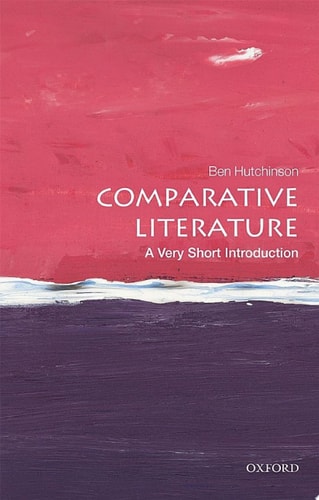
Comparative Literature: A Very Short Introduction
0
0
As an Amazon Associate and affiliate partner, Menrva Books earns from qualifying purchases. Learn more
Author Description
Comparative Literature is both the past and the future of literary studies. Its history is intimately linked to the political upheavals of modernity: from colonial empire-building in the nineteenth century, via the Jewish diaspora of the twentieth century, to the postcolonial culture wars of the twenty-first century, attempts at 'comparison' have defined the international agenda of literature. But what is comparative literature? Ambitious readers looking to stretch themselves are usually intrigued by the concept, but uncertain of its implications. And rightly so, in many ways: even the professionals cannot agree on a single term, calling it comparative in English, compared in French, and comparing in German. The very term itself, when approached comparatively, opens up a Pandora's box of cultural differences. Yet this, in a nutshell, is the whole point of comparative literature. To look at literature comparatively is to realize just how much can be learned by looking over the horizon of one's own culture; it is to discover not only more about other literatures, but also about one's own; and it is to participate in the great utopian dream of understanding the way nations and languages interact. In an age that is paradoxically defined by migration and border crossing on the one hand, and by a retreat into monolingualism and monoculturalism on the other, the cross-cultural agenda of comparative literature has become increasingly central to the future of the Humanities. We are all, in fact, comparatists, constantly making connections across languages, cultures, and genres as we read. The question is whether we realise it. This Very Short Introduction tells the story of Comparative Literature as an agent of international relations, from the point of view both of scholarship and of cultural history more generally. Outlining the complex history and competing theories of comparative literature, Ben Hutchinson offers an accessible means of entry into a notoriously slippery subject.
Menrva's Summary
THE THESIS
How does the practice of comparative literature function as a critical lens for understanding the intersection of global cultures, languages, and political histories? Ben Hutchinson, a scholar of modern literature, examines the evolution of comparative literature from its nineteenth-century origins to its current role in the twenty-first-century humanities. He argues that the discipline is not merely an academic exercise but a vital, ongoing process of cross-cultural engagement that challenges the limitations of monolingual perspectives. By tracing the history of the field, the book provides a framework for understanding how literature acts as an agent of international relations.
THE SCOPE MAP
What You Will Find
- Historical overview of comparative literature from the nineteenth century to the present.
- Analysis of the linguistic and cultural nuances inherent in the term 'comparative literature' across different languages.
- Examination of the relationship between literary study and political movements like colonialism and the Jewish diaspora.
- Discussion of the role of comparative literature in the modern era of migration and border crossing.
Scope Limits
- The text does not provide an exhaustive bibliography of all comparative literature theories.
- It does not offer a singular, definitive methodology for conducting comparative research.
THE AUTHORITY PERSPECTIVE
Experts recognize this volume as a concise and accessible entry point for students and general readers interested in the complexities of literary theory. Readers frequently note that the prose manages to distill dense academic debates into a manageable format without sacrificing intellectual rigor.
Page Count:
160
Publication Date:
2018-01-01
Publisher:
OUP Oxford
ISBN-10:
0192533991
ISBN-13:
9780192533999
Humanities
Literary Criticism
Comparative
Academic
Community Tags
Other Editions(3)
Similar Books


Reader Comments
Share Your Thoughts
No comments yet. Be the first to share your thoughts!