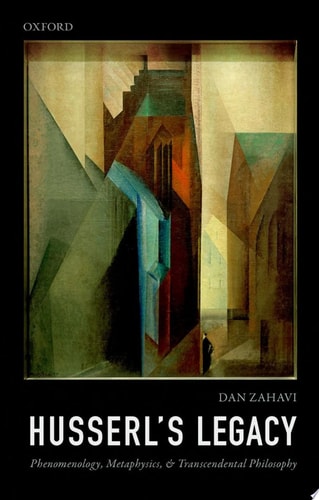
Husserl's Legacy: Phenomenology, Metaphysics, and Transcendental Philosophy
0
0
As an Amazon Associate and affiliate partner, Menrva Books earns from qualifying purchases. Learn more
Author Description
Dan Zahavi offers an in-depth and up-to-date analysis of central and contested aspects of the philosophy of Edmund Husserl, the founder of phenomenology. What is ultimately at stake in Husserl's phenomenological analyses? Are they primarily to be understood as investigations of consciousness or are they equally about the world? What is distinctive about phenomenological transcendental philosophy, and what kind of metaphysical import, if any, might it have? Husserl's Legacy offers an interpretation of the more overarching aims and ambitions of Husserlian phenomenology and engages with some of the most contested and debated questions in phenomenology. Central to its interpretative efforts is the attempt to understand Husserl's transcendental idealism. Husserl's Legacy argues that Husserl was not an internalist, nor a quietist when it comes to metaphysical issues; that he assigned a fundamental importance to facticity and intersubjectivity; and that he was not opposed to all forms of naturalism.
Menrva's Summary
THE THESIS
This work investigates the core objectives and metaphysical implications of Edmund Husserl's phenomenological project, specifically addressing the nature of his transcendental idealism. Dan Zahavi, a prominent scholar in the field, utilizes a rigorous analytical framework to re-evaluate Husserl's stance on consciousness, the world, and the relationship between phenomenology and naturalism. By examining key texts and historical debates, the author challenges traditional interpretations that characterize Husserl as a strict internalist or quietist.
THE SCOPE MAP
What You Will Find
- Analysis of Husserl's transcendental idealism and its metaphysical import
- Examination of the roles of facticity and intersubjectivity in phenomenological inquiry
- Critical assessment of Husserl's position regarding naturalism
- Engagement with contemporary debates surrounding phenomenological methodology
Scope Limits
- The text does not provide a general introduction to phenomenology for absolute beginners
- It focuses specifically on Husserl rather than the broader history of the phenomenological movement
THE AUTHORITY PERSPECTIVE
Scholars and students of continental philosophy recognize this text as a significant contribution to the ongoing re-evaluation of Husserlian thought. Readers frequently note the academic density of the prose, which is intended for those already familiar with the foundational concepts of phenomenology.
Page Count:
246
Publication Date:
2017-01-01
Publisher:
OUP Oxford
ISBN-10:
0192539329
ISBN-13:
9780192539328
Philosophy
Metaphysics
Transcendental Philosophy
Continental Philosophy
Phenomenology
Community Tags
Similar Books