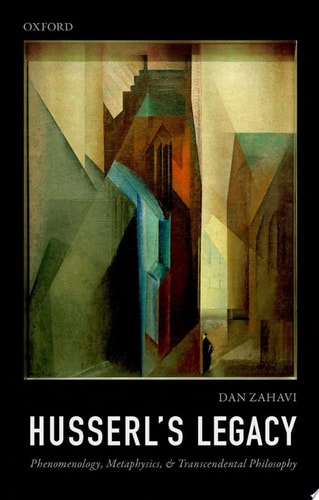
Husserl's Legacy
0
0
As an Amazon Associate and affiliate partner, Menrva Books earns from qualifying purchases. Learn more
Author Description
Dan Zahavi Offers An In-depth And Up-to-date Analysis Of Central And Contested Aspects Of The Philosophy Of Edmund Husserl, The Founder Of Phenomenology. What Is Ultimately At Stake In Husserl's Phenomenological Analyses? Are They Primarily To Be Understood As Investigations Of Consciousness Or Are They Equally About The World? What Is Distinctive About Phenomenological Transcendental Philosophy, And What Kind Of Metaphysical Import, If Any, Might It Have? Husserl's Legacy Offers An Interpretation Of The More Overarching Aims And Ambitions Of Husserlian Phenomenology And Engages With Some Of The Most Contested And Debated Questions In Phenomenology. Central To Its Interpretative Efforts Is The Attempt To Understand Husserl's Transcendental Idealism. Zahavi Argues That Husserl Was Not A Sophisticated Introspectionist, Not A Phenomenalist, Nor An Internalist, Not A Quietist When It Comes To Metaphysical Issues, And Not Opposed To All Forms Of Naturalism. Husserl's Legacy Argues That Husserl's Phenomenology Is As Much About The World As It Is About Consciousness, And That A Proper Grasp Of Husserl's Transcendental Idealism Reveals The Fundamental Importance Of Facticity And Intersubjectivity.
Menrva's Summary
THE THESIS
This book investigates the core objectives and metaphysical implications of Edmund Husserl's phenomenological project to determine whether his work functions primarily as an analysis of consciousness or as an account of the world. Dan Zahavi, a prominent scholar in the field of phenomenology, utilizes a rigorous analytical framework to re-evaluate Husserl's transcendental idealism. By addressing common misconceptions regarding Husserl's stance on introspection, phenomenalism, and naturalism, the author constructs a defense of phenomenology as a discipline deeply concerned with facticity and intersubjectivity.
THE SCOPE MAP
What You Will Find
- A systematic re-interpretation of Husserl's transcendental idealism
- Critical analysis of the relationship between consciousness and the world
- Examination of Husserl's position on metaphysics and naturalism
Scope Limits
- The text does not provide a general introductory overview of Husserl's entire bibliography
- It does not focus on the historical reception of phenomenology outside of specific philosophical debates
THE AUTHORITY PERSPECTIVE
Scholars and students of continental philosophy frequently cite this work as a significant contribution to contemporary Husserlian studies. Readers often note the academic density of the prose, which is intended for those already familiar with the foundational texts of phenomenology.
Page Count:
224
Publication Date:
2017-01-01
Publisher:
Oxford University Press
ISBN-10:
0191507717
ISBN-13:
9780191507717
Philosophy
Continental Philosophy
Phenomenology
Epistemology
Metaphysics
Community Tags
Similar Books