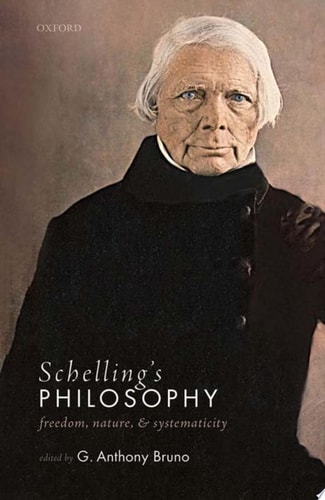
Schelling's Philosophy
0
0
As an Amazon Associate and affiliate partner, Menrva Books earns from qualifying purchases. Learn more
Author Description
The Current Wave Of Critical And Historical Engagement With Idealist Texts Affords An Unprecedented Opportunity To Discover The Richness And Value Of The Thought Of F. W. J. Schelling. In This Volume Leading Scholars Offer Compelling Reasons To Regard Schelling As One Of Kant's Most Incisive Interpreters, A Pioneering Philosopher Of Nature, A Resolute Philosopher Of Human Finitude And Freedom, A Nuanced Thinker Of The Bounds Of Logic And Self-consciousness, And Perhaps Hegel's Most Effective Critic. The Volume Provides A Wide-ranging Presentation Of Schelling's Original Contribution To, And Internal Critique Of, The Basic Insights Of German Idealism, His Role In Shaping The Course Of Post-kantian Thought, And His Sensitivity And Innovative Responses To Questions Of Lasting Metaphysical, Epistemological, Ethical, Aesthetic, And Theological Importance.
Menrva's Summary
THE THESIS
This volume investigates the enduring significance of F. W. J. Schelling’s philosophical contributions and his critical role in the development of German Idealism. Edited by G. Anthony Bruno, the book compiles essays from leading scholars who analyze Schelling’s work as a bridge between Kantian foundations and post-Kantian developments. The contributors utilize historical and critical analysis to re-evaluate Schelling’s influence on metaphysics, ethics, and theology, positioning him as a primary interlocutor for Hegel and a distinct voice in the study of human finitude.
THE SCOPE MAP
What You Will Find
- Critical analysis of Schelling’s interpretation of Kantian philosophy
- Examination of Schelling’s philosophy of nature and self-consciousness
- Comparative studies between Schelling and Hegel
- Investigations into metaphysical, epistemological, and ethical frameworks
Scope Limits
- The text does not provide a general biography of Schelling’s life
- It does not serve as an introductory primer for readers without prior knowledge of German Idealism
THE AUTHORITY PERSPECTIVE
Experts identify this volume as a significant contribution to the contemporary re-evaluation of Schelling’s place within the canon of German Idealism. Readers frequently note the academic density of the prose, which is intended for scholars and advanced students of philosophy.
Page Count:
256
Publication Date:
2020-01-01
Publisher:
Oxford University Press
ISBN-10:
0192542052
ISBN-13:
9780192542052
Philosophy
Epistemology
Philosophy history
Metaphysics
Community Tags
Similar Books