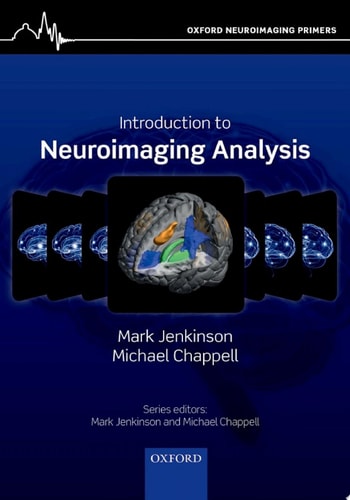
Introduction to Neuroimaging Analysis
0
0
As an Amazon Associate and affiliate partner, Menrva Books earns from qualifying purchases. Learn more
Author Description
MRI has emerged as a powerful way of studying in-vivo brain structure and function in both healthy and disease states. Whilst new researchers may be able to call upon advice and support for acquisition from operators, radiologists and technicians, it is more challenging to obtain an understanding of the principles of analysing neuroimaging data. This is crucial for choosing acquisition parameters, designing and performing appropriate experiments, and correctly interpreting the results. This primer gives a general and accessible introduction to the wide array of MRI-based neuroimaging methods that are used in research. Supplemented with online datasets and examples to enable the reader to obtain hands-on experience working with real data, it provides a practical and approachable introduction for those new to the neuroimaging field. The text also covers the fundamentals of what different MRI modalities measure, what artifacts commonly occur, the essentials of the analysis, and common 'pipelines' including brain extraction, registration and segmentation. As it does not require any background knowledge beyond high-school mathematics and physics, this primer is essential reading for anyone wanting to work in neuroimaging or grasp the results coming from this rapidly expanding field. The Oxford Neuroimaging Primers are short texts aimed at new researchers or advanced undergraduates from the biological, medical or physical sciences. They are intended to provide a broad understanding of the ways in which neuroimaging data can be analyzed and how that relates to acquisition and interpretation. Each primer has been written so that it is a stand-alone introduction to a particular area of neuroimaging, and the primers also work together to provide a comprehensive foundation for this increasingly influential field.
Menrva's Summary
THE THESIS
This primer investigates the fundamental principles and methodologies required to analyze neuroimaging data effectively. Authors Mark Jenkinson and Michael Chappell, experts in the field, provide a structured framework for understanding MRI-based research. The text bridges the gap between data acquisition and interpretation, offering a foundational guide for researchers who need to design experiments and analyze results without requiring advanced mathematical or physical expertise.
THE SCOPE MAP
What You Will Find
- Fundamentals of MRI modalities and measurement principles
- Common artifacts and data quality issues
- Standard analysis pipelines including brain extraction, registration, and segmentation
- Practical exercises using provided online datasets
Scope Limits
- Advanced clinical diagnostic protocols
- Complex mathematical derivations beyond high-school physics
- Specialized software-specific programming tutorials
THE AUTHORITY PERSPECTIVE
Experts and educators recognize this text as a highly accessible entry point for students and early-career researchers entering the neuroimaging field. Readers frequently note that the prose is clear and well-suited for those transitioning from biological or physical sciences into neuroimaging research.
Page Count:
276
Publication Date:
2018-01-01
Publisher:
OUP Oxford
ISBN-10:
0192548271
ISBN-13:
9780192548276
Science
Neuroscience
Academic
Medical
Radiology
Brain Diseases
Allied Health
Research Methods
Community Tags
Other Editions(3)

Similar Books












Reader Comments
Share Your Thoughts
No comments yet. Be the first to share your thoughts!