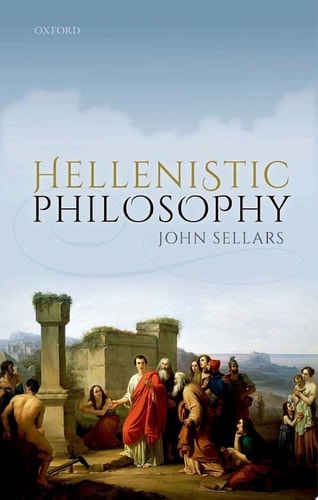
Hellenistic Philosophy
0
0
As an Amazon Associate and affiliate partner, Menrva Books earns from qualifying purchases. Learn more
Author Description
The Hellenistic period was a rich and exciting time for philosophy. It saw the birth of two new schools of thought, Epicureanism and Stoicism, and important developments in Plato's Academy. Aristotelians and Cynics were also active during the period, all of which created a vibrant philosophical landscape. Many of the ideas now associated with early modern and enlightenment philosophy - such as empiricism, materialism, and religious scepticism - were widely discussed by Hellenistic philosophers. In Hellenistic Philosophy, Sellars offers a thematic introduction to the philosophy of this era. The author highlights the very practical outlook common of the time, in which philosophy was seen as a guide for life, and summarizes the key debates on a series of topics, ranging from epistemology to political philosophy. The works of Hellenistic philosophers had a vital influence on later thought, and especially on the development of early modern philosophy. In providing an accessible outline of this important era, the book is of particular use to students and general readers interested in the period. It is also an invaluable resource for teaching with its guide to Hellenistic philosophers, chronology, and extensive cross-references to standard collections of ancient texts.
Menrva's Summary
THE THESIS
This book investigates the core tenets and practical applications of philosophical schools during the Hellenistic period. John Sellars, a scholar of ancient philosophy, utilizes a thematic framework to organize the complex ideas of Epicureans, Stoics, Cynics, and Academics. He argues that Hellenistic philosophy functioned primarily as a guide for living, emphasizing the transition from abstract theory to practical ethics and logic.
THE SCOPE MAP
What You Will Find
- A thematic analysis of epistemology, ethics, and political philosophy.
- A comprehensive guide to key Hellenistic philosophers and their schools.
- Chronological data and cross-references to standard collections of ancient texts.
Scope Limits
- The text does not provide an exhaustive line-by-line commentary on every extant fragment of the era.
- It focuses primarily on the thematic development of ideas rather than a strictly biographical history of the thinkers.
THE AUTHORITY PERSPECTIVE
Experts and educators frequently cite this work as a highly accessible entry point for students and general readers seeking to understand the practical nature of ancient thought. Readers often note the clarity of the prose, which successfully distills dense philosophical debates into a coherent and manageable structure.
Page Count:
272
Publication Date:
2018-01-01
Publisher:
OUP Oxford
ISBN-10:
0192559710
ISBN-13:
9780192559715
History
Philosophy
stoicism
History & Surveys
Epistemology
Political Philosophy
Epicureanism
Community Tags
Similar Books