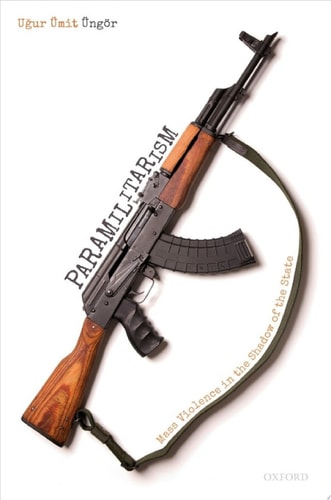
Paramilitarism: Mass Violence in the Shadow of the State
0
0
As an Amazon Associate and affiliate partner, Menrva Books earns from qualifying purchases. Learn more
Author Description
From the deserts of Sudan to the jungles of Colombia, and from the streets of Belfast to the mountains of Kurdistan, paramilitaries have appeared in violent conflicts in very different settings. Paramilitaries are generally depicted as irregular armed organizations that carry out acts of violence against civilians on behalf of a state. In doing so, they undermine the state's monopoly of legitimate violence, while at the same time creating a breeding ground for criminal activities. Why do governments with functioning police forces and armies use paramilitary groups? This study tackles this question through the prism of the interpenetration of paramilitaries and the state. The author interprets paramilitarism as the ability of the state to successfully outsource mass political violence against civilians that transforms and traumatizes societies. It analyses how paramilitarism can be understood in global context, and how paramilitarism is connected to transformations of warfare and state-society relations. By comparing a broad range of cases, it looks at how paramilitarism has made a profound impact in a large number of countries that were different, but nevertheless shared a history of pro-government militia activity. A thorough understanding of paramilitarism can clarify the direction and intensity of violence in wartime and peacetime. The volume examines the issues of international involvement, institutional support, organized crime, party politics, and personal ties.
Menrva's Summary
THE THESIS
This study investigates why governments with functioning police forces and armies choose to utilize paramilitary groups to conduct mass political violence against civilians. Uğur Ümit Üngör, a scholar of mass violence and genocide, examines the structural interpenetration between state institutions and irregular armed organizations. The author argues that paramilitarism functions as a mechanism for states to outsource violence, thereby transforming social structures and traumatizing populations while maintaining a veneer of deniability.
THE SCOPE MAP
What You Will Find
- Comparative analysis of paramilitary activity across diverse global regions including Sudan, Colombia, Northern Ireland, and Kurdistan.
- Examination of the nexus between institutional support, party politics, and organized crime.
- Analysis of how paramilitary violence alters state-society relations and the nature of modern warfare.
Scope Limits
- The text does not provide a comprehensive history of every global conflict involving militias.
- The analysis focuses primarily on the state-sanctioned outsourcing of violence rather than the internal tactical operations of individual paramilitary units.
THE AUTHORITY PERSPECTIVE
Scholars and political analysts recognize this work as a significant contribution to the study of state-sponsored violence and irregular warfare. Readers frequently note the academic rigor and the clarity with which the author connects disparate historical case studies to broader theoretical frameworks.
Page Count:
222
Publication Date:
2020-01-01
Publisher:
OUP Oxford
ISBN-10:
0192558994
ISBN-13:
9780192558992
History
Paramilitary forces
Conflict Studies
Sociology
International relations
Military History
Community Tags
Similar Books