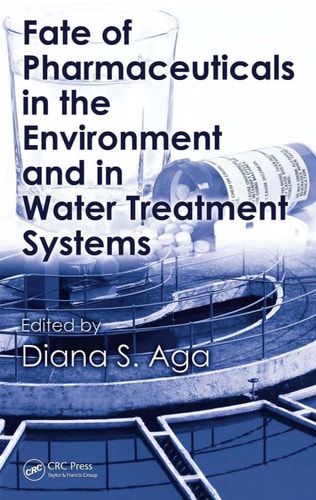
Fate of Pharmaceuticals in the Environment and in Water Treatment Systems
0
0
As an Amazon Associate and affiliate partner, Menrva Books earns from qualifying purchases. Learn more
Author Description
The detection of pharmaceutical residues remained elusive until instruments such as liquid chromatography and mass spectrometry became commonplace in environmental laboratories. The documentation of the occurrence of pharmaceutical residues and endocrine disrupting chemicals in water resources has raused questions about their long-term effects in the ecosystem and their potential effects on human health. Fate of Pharmaceuticals in the Environment and in Water Treatment Systems covers critical issues regarding the occurrence, persistence, treatment, and transformations of pharmaceuticals in the environment and in drinking water and wastewater treatment systems. Acompilation of the recent literature, the book reviews advances in instrumentation and sample preparation techniques and includes an example of how risk assessment is conducted to investigate the fate and effects of pharmaceutical contaminants. Several chapters explore the behavior of pharmaceuticals in soil and the potential side effects of antibiotics on plants after uptake. Experts in drinking water and wastewater treatment systems present new findings on the effectiveness of current treatment practices to reduce the concentrations of pharmaceuticals at the source, providing new insights on how to better mitigate future problems brought about by emerging environmental contaminants. Contributing authors from academia, government, and industry provide a well-balanced multi-disciplinary perspective on the issues, discussing topics ranging from field studies documenting the occurrence of pharmaceuticals in environmental compartments, to laboratory studies determining the degradation kinetics and formation of by-products during treatment. The text discusses the factors that affect the environmental fate of pharmaceuticals in soil and water, facilitate the development of best management practices, and optimize treatment systems for removal of these compounds from the environment.
Menrva's Summary
THE THESIS
This book investigates the complex pathways and impacts of pharmaceutical residues within environmental systems and water treatment processes. Diana S. Aga's compilation addresses the critical challenges posed by the increasing detection of pharmaceutical residues and endocrine-disrupting chemicals in water resources. It examines their persistence, transformation, and the effectiveness of current treatment methods, drawing on a multi-disciplinary perspective from academia, government, and industry. The text explores the behavior of these contaminants in soil and their effects on plants, alongside new findings on mitigating their presence in drinking water and wastewater.
THE SCOPE MAP
- Occurrence, persistence, and transformations of pharmaceuticals in the environment.
- Advances in instrumentation and sample preparation techniques for detecting pharmaceutical residues.
- Risk assessment methodologies for evaluating the fate and effects of pharmaceutical contaminants.
- Behavior of pharmaceuticals in soil and potential side effects on plants.
- Effectiveness of current drinking water and wastewater treatment practices for pharmaceutical removal.
- Field studies documenting pharmaceutical occurrence in environmental compartments.
- Laboratory studies on degradation kinetics and by-product formation during treatment.
- Factors influencing the environmental fate of pharmaceuticals and optimization of removal systems.
THE AUTHORITY PERSPECTIVE
This book is a comprehensive review of recent literature on pharmaceutical contaminants in the environment and water treatment systems. It synthesizes findings from various experts, offering a multi-disciplinary perspective on occurrence, persistence, and treatment effectiveness. The text is structured to inform researchers, practitioners, and policymakers about the challenges and potential solutions related to emerging environmental contaminants.
Page Count:
408
Publication Date:
2007-12-26
Publisher:
Taylor & Francis
ISBN-10:
1420052322
ISBN-13:
9781420052329
Science
Non-Fiction
Ecotoxicology
Public Health
Water Treatment
Community Tags
Similar Books