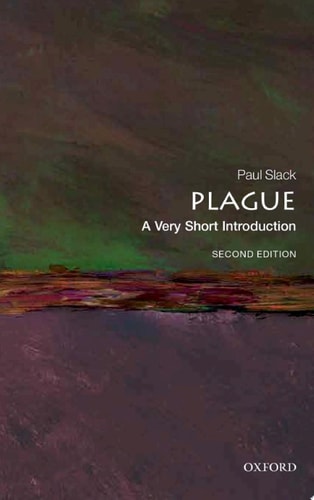
Plague: A Very Short Introduction
0
0
As an Amazon Associate and affiliate partner, Menrva Books earns from qualifying purchases. Learn more
Author Description
Very Short Introductions: Brilliant, Sharp, Inspiring Throughout history plague has been the cause of many major catastrophes. It was responsible for the 'Plague of Justinian' in 542, the Black Death of 1348, and the Great Plague of London in 1665, as well as for devastating epidemics in China and India between the 1890s and 1920s. In the 21st century Coronavirus pandemics have served as a powerful reminder that we have not escaped the global impact of epidemic diseases. In this Very Short Introduction, Paul Slack takes a global approach to explore the historical and social impact of plague over the centuries, looking at the ways in which it has been interpreted, and the powerful images it has left behind in art and literature. Examining what plague meant for those who suffered from it, and how governments began to fight against it, he demonstrates the impact plague has had on modern notions of public health, and how it has shaped our history. This new edition also includes evidence on the nature of plague taken from recent discoveries in ancient DNA as well as new research on plague in the Middle East. ABOUT THE SERIES: The Very Short Introductions series from Oxford University Press contains hundreds of titles in almost every subject area. These pocket-sized books are the perfect way to get ahead in a new subject quickly. Our expert authors combine facts, analysis, perspective, new ideas, and enthusiasm to make interesting and challenging topics highly readable.
Menrva's Summary
THE THESIS
This book investigates the historical, social, and cultural impact of plague epidemics on human civilization from antiquity to the modern era. Paul Slack, an expert in the history of medicine and public health, utilizes a global perspective to synthesize historical records, artistic representations, and contemporary scientific findings. He argues that plague has been a fundamental force in shaping government policy, public health infrastructure, and societal responses to infectious disease.
THE SCOPE MAP
What You Will Find
- Historical analysis of major outbreaks including the Plague of Justinian, the Black Death, and the Great Plague of London.
- Examination of the cultural and literary legacy of plague in art and society.
- Integration of recent scientific data derived from ancient DNA research.
Scope Limits
- The text does not provide a comprehensive clinical manual for modern disease treatment.
- It does not offer an exhaustive medical history of every localized epidemic in human history.
THE AUTHORITY PERSPECTIVE
Experts recognize this work as a concise and accessible entry point for understanding the long-term societal consequences of epidemic disease. Readers frequently note the balance between historical narrative and the inclusion of recent scientific advancements in the field of paleogenetics.
Page Count:
160
Publication Date:
2021-01-01
Publisher:
OUP Oxford
ISBN-10:
0192644491
ISBN-13:
9780192644497
Science
History
Medicine
Public Health
Social History
Medical
Epidemiology
Allied Health
Community Tags
Other Editions(3)
Similar Books