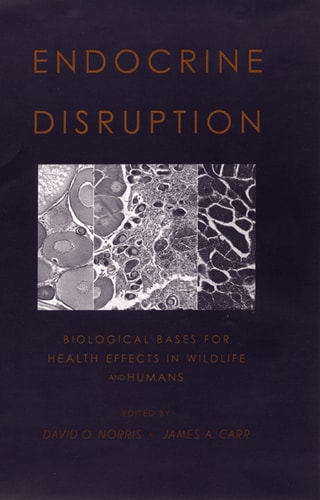
Endocrine Disruption: Biological Bases for Health Effects in Wildlife and Humans
0
0
As an Amazon Associate and affiliate partner, Menrva Books earns from qualifying purchases. Learn more
Author Description
This book addresses the biological effects of the large number of classes of compounds that have been recognized as endocrine disruptors. These compounds persist as pollutants in the environment and have been linked to a number of fertility and developmental disorders in fish, amphibians, reptiles, birds, and humans. Norris and Carr present a well-rounded and cohesive examination of the endocrinology, toxicology, and ecology related to these phenomena. They lay out the current state of understanding of the whole field, and include a final section organized by the classes of compounds that have been identified as endocrine disruptors. Endocrinologists, toxicologists, and ecologists, as well as environmentalists, politicians, and government officials - will find that this book covers the fundamentals of unfamiliar areas of experience. This is intended also to be a useful primer for students interested in a comprehensive introduction to the subject. Endocrine Disruption guides readers to a better understanding of the interrelationships and complex problems involved in assessing and regulating the health of wildlife and humans.
Menrva's Summary
THE THESIS
This book investigates the biological mechanisms through which environmental pollutants act as endocrine disruptors to impact the health and development of wildlife and human populations. David O. Norris and James A. Carr, both established experts in the field of endocrinology and toxicology, synthesize current research to explain how these chemical compounds interfere with hormonal systems. The text provides a cohesive framework that bridges the gap between basic endocrine science and the broader ecological consequences of environmental contamination.
THE SCOPE MAP
What You Will Find
- Detailed examination of endocrinology, toxicology, and ecology as they relate to chemical pollutants.
- Analysis of developmental and fertility disorders across various species, including fish, amphibians, reptiles, birds, and humans.
- A comprehensive classification system for identifying specific groups of endocrine-disrupting compounds.
Scope Limits
- The text focuses on biological and physiological mechanisms rather than providing specific legislative or policy-making blueprints.
- It does not cover every emerging chemical compound discovered after the publication date, focusing instead on established classes of disruptors.
THE AUTHORITY PERSPECTIVE
Experts and academics recognize this work as a foundational primer for students and professionals entering the fields of environmental toxicology and endocrinology. Readers frequently note the technical density of the prose, which effectively balances complex biological data with accessible explanations for a multidisciplinary audience.
Page Count:
491
Publication Date:
2005-01-01
Publisher:
Oxford University Press
ISBN-10:
0190285915
ISBN-13:
9780190285913
Science
Endocrinology
Toxicology
Public Health
Medical
Reproductive Toxicology
Allied Health
Biology
Community Tags
Similar Books