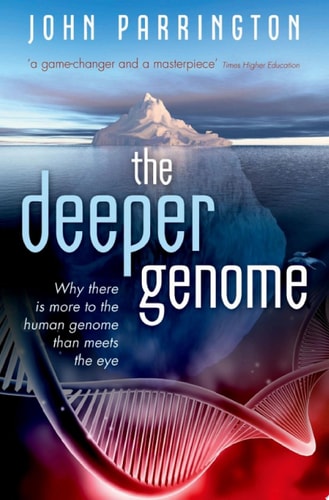
The Deeper Genome: Why there is more to the human genome than meets the eye
0
0
As an Amazon Associate and affiliate partner, Menrva Books earns from qualifying purchases. Learn more
Author Description
Over a decade ago, as the Human Genome Project completed its mapping of the entire human genome, hopes ran high that we would rapidly be able to use our knowledge of human genes to tackle many inherited diseases, and understand what makes us unique among animals. But things didn't turn out that way. For a start, we turned out to have far fewer genes than originally thought -- just over 20,000, the same sort of number as a fruit fly or worm. What's more, the proportion of DNA consisting of genes coding for proteins was a mere 2%. So, was the rest of the genome accumulated 'junk'? Things have changed since those early heady days of the Human Genome Project. But the emerging picture is if anything far more exciting. In this book, John Parrington explains the key features that are coming to light - some, such as the results of the international ENCODE programme, still much debated and controversial in their scope. He gives an outline of the deeper genome, involving layers of regulatory elements controlling and coordinating the switching on and off of genes; the impact of its 3D geometry; the discovery of a variety of new RNAs playing critical roles; the epigenetic changes influenced by the environment and life experiences that can make identical twins different and be passed on to the next generation; and the clues coming out of comparisons with the genomes of Neanderthals as well as that of chimps about the development of our species. We are learning more about ourselves, and about the genetic aspects of many diseases. But in its complexity, flexibility, and ability to respond to environmental cues, the human genome is proving to be far more subtle than we ever imagined.
Menrva's Summary
THE THESIS
This book investigates the complexity of the human genome beyond protein-coding genes to explain how regulatory elements and environmental factors shape biological identity. John Parrington, a researcher in cellular and molecular pharmacology, synthesizes findings from the ENCODE project and comparative genomics to challenge the notion that non-coding DNA is merely biological junk. He argues that the genome functions as a dynamic, three-dimensional system capable of responding to external cues and life experiences.
THE SCOPE MAP
What You Will Find
- Analysis of regulatory elements and non-coding DNA functions
- Examination of the 3D geometry of the genome
- Overview of epigenetic mechanisms and environmental influence
- Comparative genomic data from Neanderthals and chimpanzees
Scope Limits
- Does not provide a comprehensive clinical manual for genetic diseases
- Does not resolve all ongoing scientific debates regarding the ENCODE project findings
THE AUTHORITY PERSPECTIVE
Experts and readers frequently note the accessibility of Parrington's prose, which translates complex molecular biology into a format suitable for an educated lay audience. The text is widely regarded as a useful synthesis of post-Human Genome Project developments for those seeking to understand the current state of genetic research.
Page Count:
350
Publication Date:
2017-01-01
Publisher:
OUP Oxford
ISBN-10:
0192552473
ISBN-13:
9780192552471
Science
Non-Fiction
Genomes
Genetics
Biology
Community Tags
Similar Books