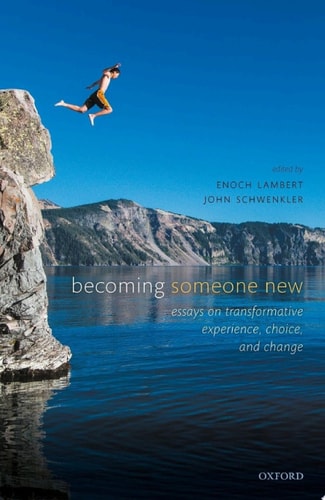
Becoming Someone New: Essays on Transformative Experience, Choice, and Change
0
0
As an Amazon Associate and affiliate partner, Menrva Books earns from qualifying purchases. Learn more
Author Description
Suppose you're offered an opportunity to experience something that is unlike anything you have ever encountered, but that's all you know—aside from the fact that the experience is physically safe and morally acceptable. How do you decide whether to take up the offer? Several philosophers have recently argued that we are in similar situations for more of our decisions than we usually recognize. Are they right? What resources can we draw on to create such situations? Are they enough to satisfy our aims of making the best decisions we can, especially in high stakes situations? This volume brings together philosophers and psychologists to investigate the phenomenon of transformative change and a host of fascinating questions it prompts. Taking their departure from seminal work on transformative choice and experience by L. A. Paul and Edna Ullmann-Margalit, the authors pursue fundamental questions concerning the nature of rationality, the limits of the imagination, and the metaphysics of the self. They also strike out into new areas, including value theory, aesthetics, moral and political philosophy. Several chapters present the results of experimental investigation into the psychology of transformation, self-concept, and moral learning.
Menrva's Summary
THE THESIS
This volume investigates the rational and psychological challenges inherent in making decisions that fundamentally alter one's perspective or identity. Editors Enoch Lambert and John Schwenkler curate a collection of essays from philosophers and psychologists who examine the limits of human imagination and the nature of the self when faced with transformative experiences. By building upon the foundational theories of L. A. Paul and Edna Ullmann-Margalit, the contributors analyze whether traditional decision-making frameworks remain viable when the outcome of a choice is inherently unknowable.
THE SCOPE MAP
What You Will Find
- Philosophical inquiries into the metaphysics of the self and the nature of rationality.
- Experimental psychological research regarding self-concept and moral learning.
- Explorations of value theory, aesthetics, and political philosophy in the context of change.
Scope Limits
- The text does not provide a practical self-help guide for personal life transitions.
- It does not offer a unified theory of transformation, focusing instead on diverse disciplinary perspectives.
THE AUTHORITY PERSPECTIVE
Experts identify this collection as a significant contribution to contemporary debates surrounding transformative choice and the limits of decision theory. Readers frequently note the academic density of the prose, which is intended for those familiar with analytic philosophy and cognitive psychology.
Page Count:
302
Publication Date:
2020-01-01
Publisher:
OUP Oxford
ISBN-10:
0192556967
ISBN-13:
9780192556967
Psychology
Philosophy
Essays
Metaphysics
Decision Theory
Ethics
Community Tags
Similar Books