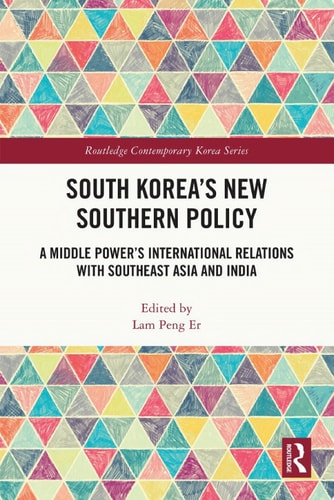
South Korea’s New Southern Policy
0
0
As an Amazon Associate and affiliate partner, Menrva Books earns from qualifying purchases. Learn more
Author Description
This book examines the first regional strategy of South Korea toward Southeast Asia and India. At issue is how a middle power (a G20 country with the tenth largest economy in the world) seeks to play a larger and more comprehensive role in regions beyond the Korean peninsula. Hitherto, South Korean foreign policy has focused on nuclearizing North Korea, alliance maintenance with the United States, tricky relations with its most important economic partner China, and difficult ties with Japan marred by historical and territorial disputes. The Moon Administration has sought to diversify South Korean foreign policy by elevating ASEAN and India to the same strategic level as the United States, China, Russia, and Japan. To be sure, the latter countries continue to be most significant to the Korean peninsula. However, this book offers different country and regional perspectives on Seoul’s first regional grand strategy to play a role commensurate with its status as a middle power.
Menrva's Summary
THE THESIS
This book investigates South Korea's strategic pivot towards Southeast Asia and India, examining its ambition to expand its influence beyond the Korean peninsula. The work analyzes how a G20 nation, possessing the world's tenth-largest economy, aims to assume a more significant and multifaceted role in regions previously outside its primary foreign policy focus. It contrasts this new strategy with South Korea's traditional emphasis on North Korean denuclearization, US alliance maintenance, complex relations with China, and strained ties with Japan. The book explores the Moon Administration's initiative to elevate ASEAN and India to a strategic parity with major global powers, offering diverse country and regional viewpoints on this first regional grand strategy.
THE SCOPE MAP
- Analysis of South Korea's 'New Southern Policy' as its first major regional strategy.
- Examination of South Korea's role as a middle power on the global stage.
- Exploration of foreign policy shifts beyond traditional focuses (North Korea, US, China, Japan).
- Inclusion of country and regional perspectives on Seoul's strategic initiatives.
- Focus on the elevation of ASEAN and India to strategic importance.
- Discussion of the geopolitical and economic implications of this policy shift.
THE AUTHORITY PERSPECTIVE
The book offers a detailed examination of South Korea's evolving foreign policy, particularly its 'New Southern Policy' towards Southeast Asia and India. It positions this strategy within the context of South Korea's status as a middle power seeking greater global engagement. The work is likely to be of interest to scholars and policymakers focused on East Asian international relations and geopolitical strategy. The analysis provides a comprehensive overview of the motivations and implications of this significant regional pivot.
Page Count:
258
Publication Date:
2023-04-17
Publisher:
Taylor & Francis
ISBN-10:
1000865568
ISBN-13:
9781000865561
Non-Fiction
History
Politics
Geopolitics
Asian Studies
Foreign Policy
International relations
Community Tags
Similar Books