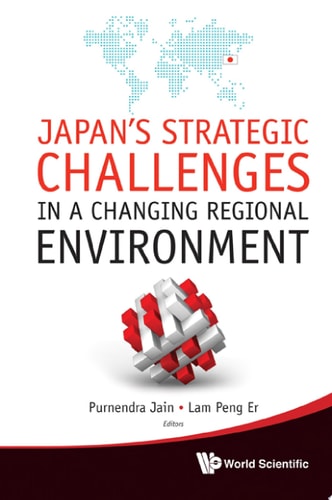
Japan's Strategic Challenges In A Changing Regional Environment
0
0
As an Amazon Associate and affiliate partner, Menrva Books earns from qualifying purchases. Learn more
Author Description
Japan faces significant challenges in both traditional and non-traditional areas of national security policy as the economic resurgence of China and the loss of US hegemonic clout significantly transform the strategic landscape of the Asia-Pacific region. How is Japan coping with this new global and regional politico-security environment? What strategic moves has it taken to best position itself for the future to maximize its global and regional influence? More importantly, how is Japan perceived within the region by traditionally close regional partners such as the US and Australia, by supporters in Southeast Asia, and by new competitors — most prominently China and India? What international role do these nations wish Japan to play? In this comprehensive volume, these crucial questions are explored in-depth by a group of scholars both distinguished and diverse. Contents: Traditional Security: Japan's Strategic Options? (Katahara Eiichi) The US–Japan Alliance in the 21 st Century: A Chinese Perspective (Wang Jian Wei) China and Japan: Hot Economics, Cold Politics? (Li Mingjiang) Japan's Strategic Response to North Korea: Activistic Security Policy, Eroding Pacifism (Kim Sung Chull) A 'United' Community in a Divided Region: Southeast Asia, Japan, China, and East Asian Community (Pavin Chachavalpongpun) India and Japan: Sharing Strategic Interests? (Arpita Mathur) Australia and Japan: Toward a Full Security Partnership? (David Walton) Non-Traditional Security: Japan's Human Security and Peace-building: Between Aspirations and Limitations (Lam Peng Er) Piracy and Maritime Security: Japan's Strategic Challenges (Sam Bateman) Japan and the G8/G20: A Global/Regional Strategy in Financial Governance (Joel Rathus) The Triple Disaster and Jap
Menrva's Summary
THE THESIS
The book investigates how Japan is adapting its national security policies in response to a rapidly shifting regional and global strategic environment. The authors explore Japan's strategic moves to enhance its influence amidst the economic resurgence of China and a perceived decline in US hegemony. It examines how regional partners like the US, Australia, and Southeast Asian nations, as well as competitors such as China and India, perceive Japan's role and what international position they envision for it. The volume synthesizes diverse scholarly perspectives on both traditional and non-traditional security challenges facing Japan.
THE SCOPE MAP
- Analysis of Japan's traditional security options and strategic choices.
- Examination of the US-Japan alliance from a Chinese perspective.
- Discussion of the complex relationship between China and Japan, characterized by strong economic ties and political tensions.
- Exploration of Japan's strategic response to North Korea, including its evolving pacifist stance.
- Assessment of Japan's role in fostering an East Asian Community amidst regional divisions.
- Investigation into shared strategic interests between India and Japan.
- Analysis of the developing security partnership between Australia and Japan.
- Discussion of Japan's human security initiatives and peace-building efforts, including their limitations.
- Examination of Japan's strategic challenges in maritime security, particularly concerning piracy.
- Exploration of Japan's global and regional strategy within financial governance through its involvement in the G8/G20.
THE AUTHORITY PERSPECTIVE
This comprehensive volume brings together a distinguished and diverse group of scholars to explore critical questions surrounding Japan's strategic positioning. The collection delves into both traditional and non-traditional security challenges, offering varied perspectives from key regional players. The chapters examine Japan's relationships with allies, partners, and competitors, providing a multi-faceted view of its international role. The book aims to offer a thorough analysis of Japan's strategic adaptation in a transforming Asia-Pacific.
Page Count:
332
Publication Date:
2012-09-07
Publisher:
World Scientific Publishing Company
ISBN-10:
9814440019
ISBN-13:
9789814440011
Politics
Non-Fiction
History
Asian Studies
International relations
Geopolitics
Security Studies
Community Tags
Similar Books