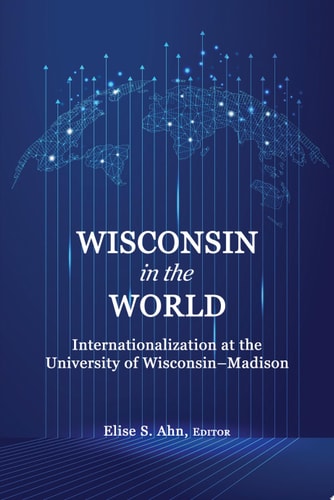
Wisconsin in the World: Internationalization at the University of Wisconsin–Madison
0
0
As an Amazon Associate and affiliate partner, Menrva Books earns from qualifying purchases. Learn more
Author Description
During the 2020 and 2021 phases of the global COVID-19 pandemic, there was significant prognostication regarding what internationalization in higher education would look like in its aftermath. Within the field of international education, many stated the need to reimagine internationalization in and of higher education in the face of severe budget cuts, restrictions on travel, and increased government protectionism in the face of growing nationalistic populism globally to name a few challenges. Absent from many of those discussions, however, were the voices of many leader-practitioners who have had to think flexibly about internationalization in higher education in order to sustain and grow programs throughout the last 20 years despite numerous exogenous factors, e.g., earlier economic recessions and viral outbreaks, along with endogenous factors like internal leadership transitions and institutional reorganizations.Wisconsin in the World explores how internationalization at the University of Wisconsin–Madison (UW) has been a decades-long, ongoing endeavor. Against that backdrop, the various chapters also provide a snapshot of how people across the UW campus were reflecting on their work amidst the COVID-19 pandemic and on the implications of the pandemic regarding the future of campus internationalization. The book is organized into four overarching sections—internationalization of the curriculum (general and language); experiential learning (co-curricular engagement and education away); establishing linkages (institutional and outreach); and administration. To highlight the expansive way campus units have been engaging in internationalization, a wide-ranging set of chapter case studies have been included. Although not exhaustive, this volume does provide a robust cross-sectional view into internationalization at UW. For international education scholars and practitioners then, a number of the chapters also highlight areas that may warrant further engagement and e
Menrva's Summary
THE THESIS
This book investigates the multifaceted and evolving nature of internationalization within a major public university, the University of Wisconsin–Madison, over several decades. It examines how the institution has navigated numerous challenges, including economic downturns, viral outbreaks, and shifts in global politics, to sustain and advance its international programs. The work draws on a wide range of case studies from across the campus, organized into four key sections: curriculum internationalization, experiential learning, institutional linkages, and administration, offering a comprehensive view of the university's global engagement efforts.
THE SCOPE MAP
- Case studies on the internationalization of the curriculum, including general education and language programs.
- Exploration of experiential learning, covering co-curricular engagement and education abroad.
- Analysis of strategies for establishing institutional linkages and outreach programs.
- Examination of the administrative structures and approaches to internationalization.
- Reflections on the impact of the COVID-19 pandemic on campus internationalization efforts.
- Insights from leader-practitioners who have sustained and grown international programs over the past 20 years.
THE AUTHORITY PERSPECTIVE
The book offers a detailed examination of internationalization strategies at the University of Wisconsin–Madison, providing a valuable resource for scholars and practitioners in international education. The inclusion of diverse case studies across curriculum, experiential learning, and institutional linkages highlights the breadth of global engagement within a higher education setting. The work is particularly relevant for its analysis of how universities adapt to external challenges, such as economic recessions and global health crises, and its contemporary reflections on the implications of the COVID-19 pandemic for the future of campus internationalization. The structured approach, covering both programmatic and administrative aspects, suggests a thorough and practical overview for those involved in shaping global education initiatives.
Page Count:
605
Publication Date:
2023-07-01
Publisher:
Information Age Publishing
ISBN-13:
9798887302249
History
Non-Fiction
Business
Community Tags
Similar Books














