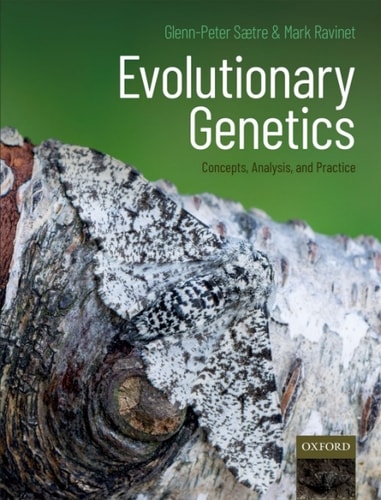
Evolutionary Genetics: Concepts, Analysis, and Practice
0
0
As an Amazon Associate and affiliate partner, Menrva Books earns from qualifying purchases. Learn more
Author Description
With recent technological advances, vast quantities of genetic and genomic data are being generated at an ever-increasing pace. The explosion in access to data has transformed the field of evolutionary genetics. A thorough understanding of evolutionary principles is essential for making sense of this, but new skill sets are also needed to handle and analyze big data. This contemporary textbook covers all the major components of modern evolutionary genetics, carefully explaining fundamental processes such as mutation, natural selection, genetic drift, and speciation. It also draws on a rich literature of exciting and inspiring examples to demonstrate the diversity of evolutionary research, including an emphasis on how evolution and selection has shaped our own species. Practical experience is essential for developing an understanding of how to use genetic and genomic data to analyze and interpret results in meaningful ways. In addition to the main text, a series of online tutorials using the R language serves as an introduction to programming, statistics, and analysis. Indeed the R environment stands out as an ideal all-purpose source platform to handle and analyze such data. The book and its online materials take full advantage of the authors' own experience in working in a post-genomic revolution world, and introduces readers to the plethora of molecular and analytical methods that have only recently become available. Evolutionary Genetics is an advanced but accessible textbook aimed principally at students of various levels (from undergraduate to postgraduate) but also for researchers looking for an updated introduction to modern evolutionary biology and genetics.
Menrva's Summary
THE THESIS
How can researchers effectively integrate modern genomic data with fundamental evolutionary principles to interpret biological processes? Glenn-Peter Saetre and Mark Ravinet leverage their extensive research backgrounds to bridge the gap between classical evolutionary theory and the post-genomic era. The authors argue that a dual mastery of theoretical concepts—such as mutation, selection, and drift—and computational proficiency is required to navigate contemporary biological data. By synthesizing traditional principles with modern analytical techniques, the text provides a framework for understanding how evolutionary forces shape species, including humans.
THE SCOPE MAP
What You Will Find
- Comprehensive coverage of mutation, natural selection, genetic drift, and speciation.
- Integration of R-based programming tutorials for statistical analysis.
- Case studies demonstrating the application of molecular methods to evolutionary research.
Scope Limits
- The text assumes a foundational knowledge of basic biology and statistics.
- It does not provide an exhaustive history of pre-genomic evolutionary thought.
THE AUTHORITY PERSPECTIVE
Academic reviewers identify this text as a bridge between theoretical biology and practical bioinformatics. Students and researchers frequently note the balance between conceptual clarity and the technical demands of modern data analysis.
Page Count:
336
Publication Date:
2019-01-01
Publisher:
OUP Oxford
ISBN-10:
0192566652
ISBN-13:
9780192566652
Science
textbook
Academic
Genetics
Evolutionary Biology
Bioinformatics
Evolutionary genetics
Evolution
Community Tags
Similar Books