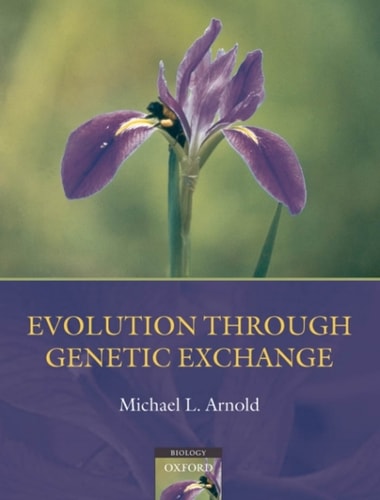
Evolution through Genetic Exchange
0
0
As an Amazon Associate and affiliate partner, Menrva Books earns from qualifying purchases. Learn more
Author Description
Even before the publication of Darwin's Origin of Species, the perception of evolutionary change has been a tree-like pattern of diversification - with divergent branches spreading further and further from the trunk. In the only illustration of Darwin's treatise, branches large and small never reconnect. However, it is now evident that this view does not adequately encompass the richness of evolutionary pattern and process. Instead, the evolution of species from microbes to mammals builds like a web that crosses and re-crosses through genetic exchange, even as it grows outward from a point of origin. Some of the avenues for genetic exchange, for example introgression through sexual recombination versus lateral gene transfer mediated by transposable elements, are based on definably different molecular mechanisms. However, even such widely different genetic processes may result in similar effects on adaptations (either new or transferred), genome evolution, population genetics, and the evolutionary/ecological trajectory of organisms. For example, the evolution of novel adaptations (resulting from lateral gene transfer) leading to the flea-borne, deadly, causative agent of plague from a rarely-fatal, orally-transmitted, bacterial species is quite similar to the adaptations accrued from natural hybridization between annual sunflower species resulting in the formation of several new species. Thus, more and more data indicate that evolution has resulted in lineages consisting of mosaics of genes derived from different ancestors. It is therefore becoming increasingly clear that the tree is an inadequate metaphor of evolutionary change. In this book, Arnold promotes the 'web-of-life' metaphor as a more appropriate representation of evolutionary change in all lifeforms. This research level text is suitable for senior undergraduate and graduate level students taking related courses in departments of genetics, ecology and evolution. It will also be of relevance and use to prof
Menrva's Summary
THE THESIS
This book investigates the limitations of the traditional tree-of-life metaphor in evolutionary biology, proposing instead a web-of-life model to account for genetic exchange. Michael L. Arnold, a researcher in the field of evolutionary genetics, synthesizes data from diverse biological domains to argue that horizontal gene transfer and introgression are fundamental, rather than peripheral, drivers of evolutionary change. By comparing molecular mechanisms across microbes and mammals, the author demonstrates that genetic mosaics are a pervasive feature of life's history.
THE SCOPE MAP
What You Will Find
- Comparative analysis of introgression and lateral gene transfer mechanisms
- Examination of genome evolution and population genetics across diverse taxa
- Case studies ranging from bacterial adaptation to plant speciation
- Theoretical framework for the web-of-life model
Scope Limits
- Does not provide a comprehensive history of all evolutionary theories
- Focuses primarily on genetic exchange mechanisms rather than broader paleontological evidence
THE AUTHORITY PERSPECTIVE
Experts recognize this text as a specialized resource for advanced students and researchers in genetics and evolutionary biology. Readers frequently note the technical density of the prose, which assumes a strong foundational knowledge of molecular biology and population genetics.
Page Count:
272
Publication Date:
2006-01-01
Publisher:
Oxford University Press
ISBN-10:
019152462X
ISBN-13:
9780191524622
Science
Ecology
Evolutionary genetics
Evolution
Evolutionary Biology
Genetics
Biology
Hybridization
Community Tags
Other Editions(2)
Similar Books




Reader Comments
Share Your Thoughts
No comments yet. Be the first to share your thoughts!