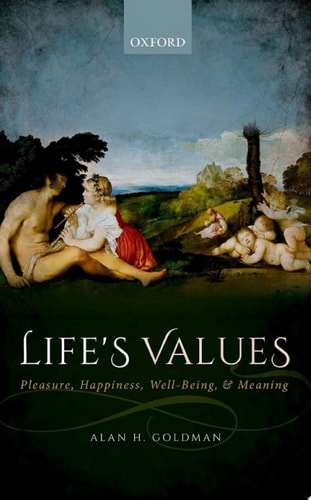
Life's Values: Pleasure, Happiness, Well-Being, and Meaning
0
0
As an Amazon Associate and affiliate partner, Menrva Books earns from qualifying purchases. Learn more
Author Description
In Life's Values Alan H. Goldman seeks to explain what is of ultimate value in individual lives. The proposed candidates include pleasure, happiness, meaning, and well-being. Only the latter is the all-inclusive category of personal value, and it consists in the satisfaction of deep rational desires. Since individuals' rational desires differ, the book cannot dictate what will maximize your own well-being and what in particular you ought to pursue. However it can tell you to make your desires rational (that is, informed and coherent) and it can also explain the nature of these states that typically enter into well-being: pleasure, happiness, and meaning being typically partial causes as well as effects of well-being. All are by-products of satisfying rational desires and rarely successfully aimed at directly. Pleasure comes in sensory, intentional, and pure feeling forms, each with an opposite in pain or distress. Happiness in its primary sense is an emotion, not a constant state as some philosophers assume, and in secondary senses a mood (disposition to have an emotion) or temperament (disposition to be in a mood). Meaning in life is a matter of events in one's life fitting into intelligible narratives. Events in narratives are understood teleologically as well as causally, in terms of outcomes aimed at as well antecedent events. So, in the briefest terms, this book distinguishes and relates pleasure, happiness, well-being, and meaning, and relates each to motivation and value.
Menrva's Summary
THE THESIS
This book investigates the nature of ultimate value in individual lives by analyzing the relationship between pleasure, happiness, meaning, and well-being. Alan H. Goldman, a philosopher, utilizes a rational-desire framework to argue that well-being is the primary category of personal value. He posits that well-being is achieved through the satisfaction of informed and coherent rational desires, rather than the direct pursuit of fleeting states.
THE SCOPE MAP
What You Will Find
- A philosophical taxonomy of pleasure, happiness, well-being, and meaning.
- A definition of well-being as the satisfaction of rational, informed desires.
- An analysis of narrative structure in the context of finding meaning in life.
Scope Limits
- The text does not provide a prescriptive guide for what specific goals an individual should pursue.
- The book does not offer a universal formula for maximizing personal happiness.
THE AUTHORITY PERSPECTIVE
Experts recognize this work as a rigorous analytical contribution to contemporary value theory. Readers frequently note the academic density of the prose, which is intended for those seeking a structured philosophical examination of human motivation.
Page Count:
196
Publication Date:
2018-01-01
Publisher:
OUP Oxford
ISBN-10:
0192565281
ISBN-13:
9780192565280
Philosophy
Psychology
Personal Development
Pleasure
Happiness
Mind & Body
well being
Values
Ethics
Community Tags
Similar Books