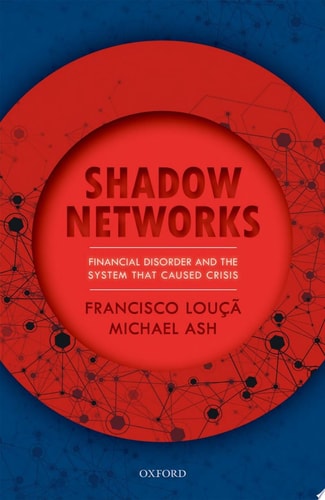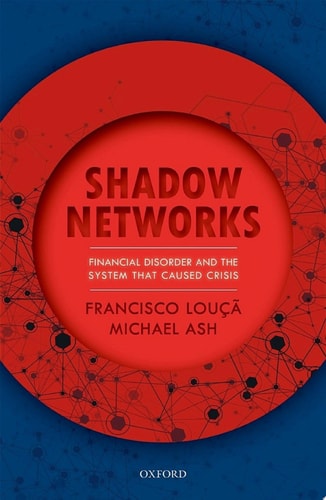
Shadow Networks: Financial Disorder and the System that Caused Crisis
0
0
As an Amazon Associate and affiliate partner, Menrva Books earns from qualifying purchases. Learn more
Author Description
The 2007-08 financial crisis surprised many economists and the public. But how did the crisis come about, why was it so deep, and why has the clean-up been so slow and painful? Many accounts of the crisis focus on renegade activity in marginal financial sectors. Shadow Networks challenges this pervading view and sets out to demonstrate that, far from a dissident branch, the shadow finance that initiated the crisis is tightly networked with, and highly profitable for, bank-based finance. The collapse was not an accident, but baked into the system of finance from the start. Shadow Networks traces the complex web of power that caused crisis and gives vivid descriptions of the actors in the quarter century leading up to 2007 to explain how the now decade-long crisis took shape. Shadow Networks: Financial Disorder and the System that Caused Crisis is a probing examination of the roles of the powerful elite. It traces the networks and institutions that support a finance-focused, market centered model of economy and society from their ascendancy to their surprising resilience in the face of manifest failures.
Menrva's Summary
THE THESIS
This book investigates the systemic origins of the 2007-08 financial crisis, arguing that the collapse was a predictable outcome of integrated financial networks rather than an isolated accident. Francisco Louçã, an economist and professor, and Michael Ash, a professor of economics and public policy, utilize historical data and institutional analysis to challenge the narrative that the crisis was caused solely by marginal actors. They present a framework that links shadow banking directly to traditional bank-based finance, illustrating how these entities operate as a unified, profit-driven system.
THE SCOPE MAP
What You Will Find
- Analysis of the quarter-century period leading up to the 2007 financial collapse
- Examination of the interconnected relationships between elite financial institutions and shadow banking sectors
- Critique of market-centered economic models and their resilience despite systemic failures
Scope Limits
- Does not provide a comprehensive technical manual for individual investment strategies
- Focuses primarily on the systemic and political-economic structures rather than granular day-to-day market fluctuations
THE AUTHORITY PERSPECTIVE
Experts and reviewers frequently note the analytical rigor with which the authors map the complex relationships between elite financial actors and institutional policy. The text is recognized as a significant contribution to the political economy of finance, providing a dense but accessible critique for those interested in the structural causes of modern economic instability.
Page Count:
416
Publication Date:
2018-01-01
Publisher:
OUP Oxford
ISBN-10:
0192563297
ISBN-13:
9780192563293
History
Economics
General Accounting
Finance