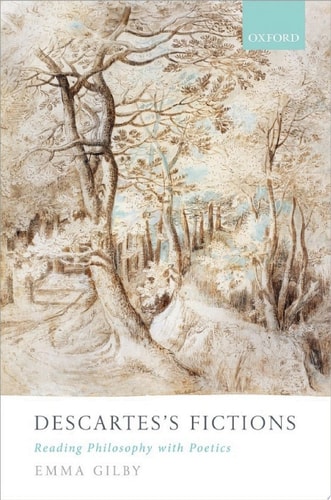
Descartes's Fictions: Reading Philosophy with Poetics
0
0
As an Amazon Associate and affiliate partner, Menrva Books earns from qualifying purchases. Learn more
Author Description
Descartes's Fictions traces common movements in early modern philosophy and literary method. Emma Gilby reassesses the significance of Descartes's writing by bringing his philosophical output into contact with the literary treatises, exempla, and debates of his age. She argues that humanist theorizing about poetics represents a vital intellectual context for Descartes's work. She offers readings of the controversies to which this poetic theory gives rise, with particular reference to the genre of tragicomedy, questions of verisimilitude or plausibility, and the figures of Guez de Balzac and Pierre Corneille. Drawing on what Descartes says about, and to, his many contemporaries and correspondents embedded in the early modern republic of letters, this volume shows that poetics provides a repository of themes and images to which he returns repeatedly: fortune, method, error, providence, passion, and imagination, for instance. Like the poets and theorists of his age, Descartes is also drawn to the forms of attention that people may bring to his work. This interest finds expression in the mature Cartesian metaphysics of the Meditations, as well as, later, in the moral philosophy of his correspondence with Elisabeth of Bohemia or the Passions of the Soul. This volume thus bridges the gap between Cartesian criticism and late-humanist literary culture in France.
Menrva's Summary
THE THESIS
This volume investigates the intersection between René Descartes's philosophical output and the literary theories of the early modern period. Emma Gilby, a scholar of French literature and thought, argues that humanist poetic traditions provided a critical framework for Descartes's own writing. By examining his correspondence and major treatises, she demonstrates how Descartes utilized the language and conceptual tools of contemporary poetics to structure his metaphysical and moral arguments.
THE SCOPE MAP
What You Will Find
- Analysis of early modern literary treatises and debates on tragicomedy
- Examination of the influence of Guez de Balzac and Pierre Corneille on Cartesian thought
- Exploration of thematic overlaps including fortune, error, passion, and imagination
- Study of the correspondence with Elisabeth of Bohemia
Scope Limits
- The text does not provide a comprehensive biography of Descartes
- It does not focus on the mathematical or scientific contributions of Descartes outside of their literary and poetic context
THE AUTHORITY PERSPECTIVE
Scholars recognize this work as a significant contribution to the study of Cartesian philosophy within the context of late-humanist culture. Readers frequently note the academic density of the prose and the specialized knowledge required to fully engage with the comparative literary analysis presented.
Page Count:
240
Publication Date:
2019-01-01
Publisher:
OUP Oxford
ISBN-10:
0192567918
ISBN-13:
9780192567918
History
Philosophy
Indigenous
16th Century
Literature
History - Modern
Humanism
French literature
Literary Criticism
Community Tags
Similar Books