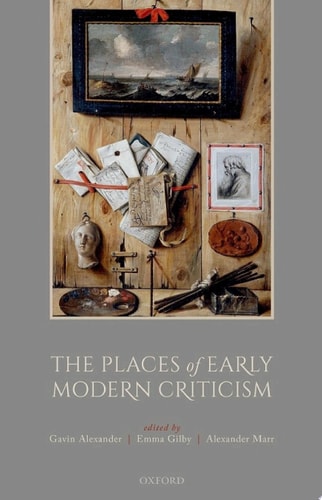
The Places of Early Modern Criticism
0
0
As an Amazon Associate and affiliate partner, Menrva Books earns from qualifying purchases. Learn more
Author Description
What is criticism? And where is it to be found? Thinking about literature and the visual arts is found in many places - in treatises, apologies, and paragoni; in prefaces, letters, and essays; in commentaries, editions, reading notes, and commonplace books; in images, sculptures, and built spaces; within or on the thresholds of works of poetry and visual art. It is situated between different disciplines and methods. Critical ideas and methods come into England from other countries, and take root in particular locations - the court, the Inns of Court, the theatre, the great house, the printer's shop, the university. The practice of criticism is transplanted to the Americas and attempts to articulate the place of poetry in a new world. And commonplaces of classical poetics and rhetoric serve both to connect and to measure the space between different critical discourses. Tracing the history of the development of early modern thinking about literature and the visual arts requires consideration of various kinds of place - material, textual, geographical - and the practices particular to those places; it also requires that those different places be brought into dialogue with each other. This book brings together scholars working in departments of English, modern languages, and art history to look at the many different places of early modern criticism. It argues polemically for the necessity of looking afresh at the scope of criticism, and at what happens on its margins; and for interrogating our own critical practices and disciplinary methods by investigating their history.
Menrva's Summary
THE THESIS
This work investigates the multifaceted locations and material contexts where early modern critical thought originated and developed. The contributors, representing diverse fields such as English, modern languages, and art history, argue that criticism is not confined to formal treatises but exists across a wide array of textual, material, and geographical spaces. By examining these varied sites, the authors propose a broader definition of critical practice and challenge contemporary scholars to re-evaluate the historical boundaries of their own disciplinary methods.
THE SCOPE MAP
What You Will Find
- Analysis of critical discourse within prefaces, letters, commonplace books, and visual art.
- Examination of institutional locations including the court, the theatre, and the printer's shop.
- Exploration of the transplantation of critical practices from Europe to the Americas.
Scope Limits
- The text does not provide a comprehensive survey of every individual critic of the period.
- It does not focus on modern literary theory outside of its historical relationship to early modern practices.
THE AUTHORITY PERSPECTIVE
Scholars identify this collection as a significant contribution to the spatial turn in early modern studies. Readers frequently note the academic density of the prose, which serves as a rigorous resource for researchers in interdisciplinary humanities.
Page Count:
301
Publication Date:
2021-01-01
Publisher:
OUP Oxford
ISBN-10:
0192571745
ISBN-13:
9780192571748
History
Art History
Indigenous
16th Century
Literary Criticism
Academic
History - Modern
History of Ideas
Community Tags
Similar Books