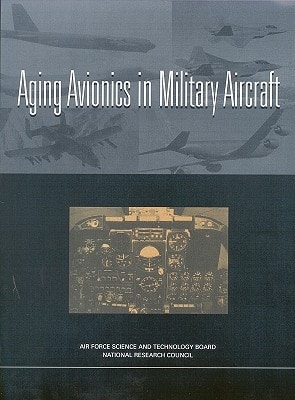
Aging Avionics in Military Aircraft
0
0
As an Amazon Associate and affiliate partner, Menrva Books earns from qualifying purchases. Learn more
Author Description
Extending the life of an airframe has proven challenging and costly. Extending the life of an avionics system, however, is one of the most critical and difficult aspects of extending total aircraft system lifetimes. Critical components go out of production or become obsolete, and many former suppliers of military-grade components have gone out of business. From 1986 to 1996, for example, the percentage of discontinued military/aerospace electronic devices nearly doubled— from 7.5 percent to 13.5 percent. In addition, legacy avionics systems, which were designed to meet requirements of the past, generally lack the full capability to perform new missions, meet new threats, or perform well in the new information-intensive battlefield environments. As the legacy aircraft fleet ages, avionics systems will become more and more difficult to support and maintain. Whereas the military once provided a large and profitable market for the electronics industry, the military electronics market today constitutes less than 1 percent of the commercial market. As a result, the military must increasingly rely on commercial off-the-shelf (COTS) technologies for its avionics hardware and software. Although COTS items are generally less expensive than comparable items designed especially to meet military specifications, the technology-refresh cycle for COTS is typically 18 months or less, which exacerbates the obsolescence problem for aircraft whose lifetimes are measured in decades. The short refresh cycle is driven mostly by the tremendous advances in computer systems, which comprise an increasing percentage of avionics content. In response to a request by the Assistant Secretary of the Air Force for Acquisition, the National Research Council convened the Committee on Aging Avionics in Military Aircraft, under the auspices of the Air Force Science and Technology Board, to conduct this study. This report summarizes the following: - Gather information from DoD, ot
Menrva's Summary
THE THESIS
The rapid obsolescence of avionics components poses a critical threat to the extended operational life of military aircraft. Extending the lifespan of military aircraft is a complex and costly endeavor, with the avionics systems presenting one of the most significant challenges. As critical components go out of production and suppliers disappear, the military faces increasing difficulty in maintaining legacy systems. The report highlights that the percentage of discontinued military/aerospace electronic devices nearly doubled between 1986 and 1996, and modern COTS technology, while cost-effective, has a refresh cycle too short for aircraft designed for decades of service. This study, commissioned by the Air Force, investigates these issues to inform strategies for managing aging avionics.
THE SCOPE MAP
- Analysis of the challenges in extending the life of avionics systems in military aircraft.
- Discussion of component obsolescence and the disappearance of military-grade component suppliers.
- Data on the increasing rate of discontinued military/aerospace electronic devices.
- Examination of the limitations of legacy avionics systems in meeting new mission requirements and threats.
- The impact of the shrinking military electronics market and the increasing reliance on Commercial Off-The-Shelf (COTS) technologies.
- The exacerbating effect of COTS technology's short refresh cycle on avionics obsolescence.
- Summary of information gathered from the Department of Defense (DoD) and other relevant entities.
THE AUTHORITY PERSPECTIVE
This report, compiled by the National Research Council at the request of the Air Force, addresses the critical issue of aging avionics in military aircraft. It details the challenges posed by component obsolescence, the limitations of legacy systems, and the complexities introduced by the increasing reliance on commercial off-the-shelf technologies with short refresh cycles. The study provides a comprehensive overview of the problem, drawing on data and information from the Department of Defense to inform strategies for maintaining the operational readiness of aging fleets.
Page Count:
57
Publication Date:
2001-05-21
Publisher:
National Academies Press
ISBN-10:
0309076714
ISBN-13:
9780309076715
Science & Technology
Non-Fiction
Aerospace
Technology
Engineering
Military
Community Tags
Similar Books







Reader Comments
Share Your Thoughts
No comments yet. Be the first to share your thoughts!