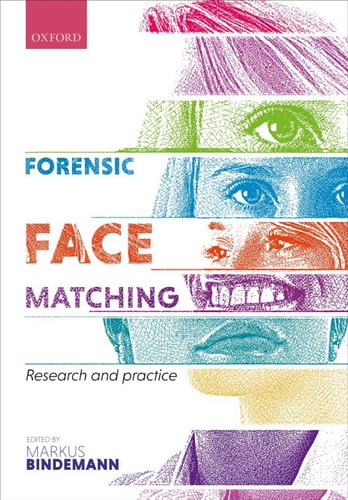
Forensic Face Matching: Research and Practice
0
0
As an Amazon Associate and affiliate partner, Menrva Books earns from qualifying purchases. Learn more
Author Description
In everyday life we identify faces regularly and seemingly with great ease. One might assume this to be a straightforward and highly accurate task. However, we are poor at identifying the faces of unfamiliar people, who we have never met before, despite the fact that many important everyday tasks depend on this. Forensic face matching requires the comparison of two face photographs, of a person who is not known to the observer. This seemingly simple task is critical for a wide range of security tasks, such as person identification at airports and borders, passport issuance and renewal, and criminal identification in police investigations. Despite its ubiquity, face matching is highly prone to error, even under conditions that are designed to maximally facilitate this task. For this reason, face matching has been studied extensively in Psychology, with the bulk of the research conducted since 2010. 'Forensic face Matching' provides readers with a wide-ranging, detailed, and critical overview of facial comparison and face matching, providing insights into its application, efficacy, and limitations in occupational settings, and of current scientific knowledge of this task.
Menrva's Summary
THE THESIS
This book investigates the inherent fallibility of human facial recognition when applied to unfamiliar individuals in high-stakes forensic and security environments. The author synthesizes over a decade of psychological research to explain why humans struggle with face matching, a task often assumed to be intuitive but which is frequently prone to significant error. By examining the gap between everyday perception and professional identification requirements, the text establishes a framework for understanding the limitations of human visual processing in security contexts.
THE SCOPE MAP
What You Will Find
- Analysis of psychological research on facial comparison conducted since 2010
- Evaluation of face matching efficacy in occupational settings like airports and border control
- Discussion of the cognitive mechanisms behind identifying unfamiliar faces
Scope Limits
- Does not provide a manual for software-based facial recognition algorithms
- Does not cover legal precedents for evidence admissibility in court
THE AUTHORITY PERSPECTIVE
Experts recognize this work as a comprehensive synthesis of contemporary psychological findings regarding forensic facial identification. Readers frequently note that the text serves as a vital resource for professionals in security and law enforcement who must navigate the documented limitations of human visual perception.
Page Count:
272
Publication Date:
2021-01-01
Publisher:
OUP Oxford
ISBN-10:
0192574809
ISBN-13:
9780192574800
Psychology
Security Studies
Criminology
Forensic Science
Community Tags
Similar Books