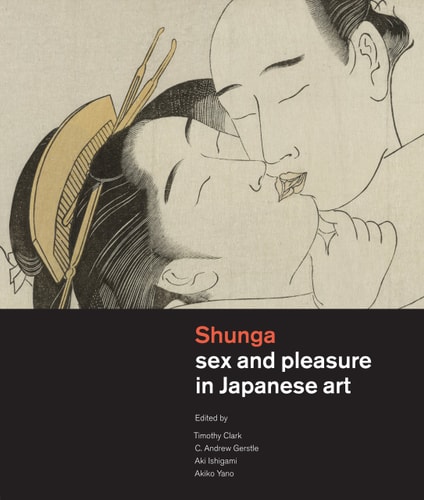
Shunga: Sex and Pleasure in Japanese Art
0
0
As an Amazon Associate and affiliate partner, Menrva Books earns from qualifying purchases. Learn more
Author Description
In early modern Japan, 1600-1900, thousands of sexually explicit paintings, prints, and illustrated books with texts were produced, known as 'spring pictures' (shunga). Frequently tender, funny and beautiful, shunga were mostly produced within the popular school known as 'pictures of the floating world' (ukiyo-e), by celebrated artists such as Utamaro and Hokusai. Early modern Japan was certainly not a sex-paradise; however, the values promoted in shunga are generally positive towards sexual pleasure for all. Official life in this period was governed by strict Confucian laws, but private life was less controlled in practice. Shunga is in some ways a unique phenomenon in pre-modern world culture, in terms of the quantity, the quality and the nature of the art that was produced. This catalogue of a major exhibition at the British Museum marks the culmination of a substantial international research project and aims to answer some key questions about what shunga was and why it was produced. In particular the social and cultural contexts for sex art in Japan are explored. Erotic Japanese art was heavily suppressed in Japan from the 1870s onwards as part of a process of cultural 'modernisation' that imported many contemporary western moral values. Only in the last twenty years or so has it been possible to publish unexpurgated examples in Japan and this ground-breaking publication presents this fascinating art in its historical and cultural context for the first time. Drawing on the latest scholarship from the leading experts in the field and featuring over 400 images of works from major public and private collections, this landmark book looks at painted and printed erotic images produced in Japan during the Edo period (1600-1868) and early Meiji era (1868-1912). These are related to the wider contexts of literature, theatre, the culture of the pleasure quarters, and urban consumerism; and interpreted in terms of their sensuality, reverence, humour and parody.
Menrva's Summary
THE THESIS
This book investigates the production, context, and cultural significance of shunga, the explicit Japanese erotic art created between 1600 and 1900. It explores the social and cultural environments that fostered the creation of these thousands of paintings, prints, and illustrated books, often produced by renowned ukiyo-e artists. The work challenges the notion of early modern Japan as a strictly controlled society, highlighting the positive values towards sexual pleasure promoted in shunga, contrasting with the era's official Confucian laws. It also examines the suppression of erotic Japanese art from the 1870s onwards and the recent resurgence of unexpurgated publications.
THE SCOPE MAP
- Analysis of 'spring pictures' (shunga) produced in early modern Japan (1600-1900).
- Exploration of the social and cultural contexts for Japanese erotic art.
- Discussion of the role of celebrated ukiyo-e artists like Utamaro and Hokusai in shunga production.
- Examination of the shift in attitudes towards erotic art during the Meiji era and its suppression.
- Insights into the unique quantity, quality, and nature of shunga compared to pre-modern world culture.
- Relationship of shunga to literature, theatre, pleasure quarters, and urban consumerism.
- Interpretation of shunga in terms of sensuality, reverence, humor, and parody.
THE AUTHORITY PERSPECTIVE
This landmark publication, stemming from a major international research project and exhibition at the British Museum, presents shunga in its historical and cultural context for the first time. Drawing on the latest scholarship from leading experts, it features over 400 images of works from significant public and private collections. The book aims to answer key questions about what shunga was and why it was produced, offering a comprehensive look at painted and printed erotic images from the Edo and early Meiji periods. It is presented as a groundbreaking work that makes this fascinating art accessible in its full historical and cultural context.
Page Count:
536
Publication Date:
2013-01-01
Publisher:
Hotei Publishing
ISBN-10:
9004263268
ISBN-13:
9789004263260
Non-Fiction
History
Art
Erotica
Cultural History
Art History
Japanese Art
Social History
Community Tags
Similar Books



Reader Comments
Share Your Thoughts
No comments yet. Be the first to share your thoughts!