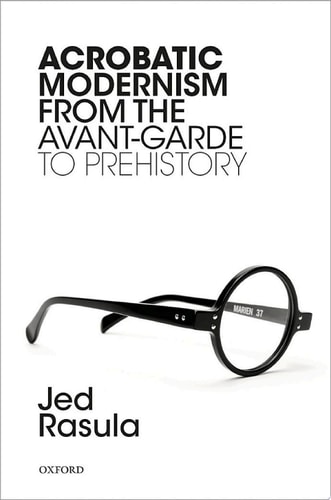
Acrobatic Modernism from the Avant-Garde to Prehistory
0
0
As an Amazon Associate and affiliate partner, Menrva Books earns from qualifying purchases. Learn more
Author Description
This is a book about artistic modernism contending with the historical transfigurations of modernity. As a conscientious engagement with modernity's restructuring of the lifeworld, the modernist avant-garde raised the stakes of this engagement to programmatic explicitness. But even beyond the vanguard, the global phenomenon of jazz combined somatic assault with sensory tutelage. Jazz, like the new technologies of modernity, re-calibrated sensory ratios. The criterion of the new as self-making also extended to names: pseudonyms and heteronyms. The protocols of modernism solicited a pragmatic arousal of bodily sensation as artistic resource, validating an acrobatic sensibility ranging from slapstick and laughter to the pathos of bereavement. Expressivity trumped representation. The artwork was a diagram of perception, not a mimetic rendering. For artists, the historical pressures of altered perception provoked new models, and Ezra Pound's slogan 'Make It New' became the generic rallying cry of renovation. The paradigmatic stance of the avant-garde was established by Futurism, but the discovery of prehistoric art added another provocation to artists. Paleolithic caves validated the spirit of all-over composition, unframed and dynamic. Geometric abstraction, Constructivism and Purism, and Surrealism were all in quest of a new mythology. Making it new yielded a new pathos in the sensation of radical discrepancy between futurist striving and remotest antiquity. The Paleolithic cave and the USSR emitted comparable siren calls on behalf of the remote past and the desired future. As such, the present was suffused with the pathos of being neither, but subject to both.
Menrva's Summary
THE THESIS
This work investigates how the modernist avant-garde navigated the tension between the rapid technological advancements of modernity and the primitive allure of prehistoric art. Jed Rasula, a scholar of modernist literature and culture, utilizes a multidisciplinary framework to examine how artists reconfigured sensory perception. He argues that modernism functioned as an acrobatic engagement with history, where the drive to 'make it new' was constantly mediated by the discovery of ancient, Paleolithic aesthetics.
THE SCOPE MAP
What You Will Find
- Analysis of the intersection between jazz, technology, and sensory perception.
- Examination of the role of pseudonyms and heteronyms in modernist identity construction.
- Comparative study of Futurism, Constructivism, Purism, and Surrealism.
- Exploration of the influence of Paleolithic cave art on twentieth-century abstraction.
Scope Limits
- The text does not provide a comprehensive history of all modernist movements.
- It does not focus on traditional mimetic art forms, prioritizing expressivity over representation.
THE AUTHORITY PERSPECTIVE
Scholars and critics frequently note the dense, interdisciplinary nature of Rasula's prose, which bridges literary theory and art history. Experts highlight this as a significant contribution to understanding the psychological and sensory pressures that defined the modernist era.
Page Count:
480
Publication Date:
2020-01-01
Publisher:
OUP Oxford
ISBN-10:
0192570722
ISBN-13:
9780192570727
Aesthetics
Art History
Modernism
Music History
Avant-garde
Humanities
Literary Criticism
Community Tags
Similar Books