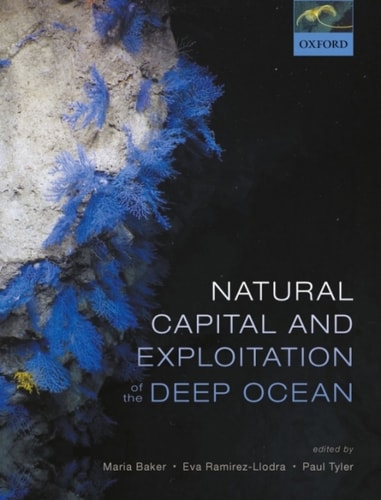
Natural Capital and Exploitation of the Deep Ocean
0
0
As an Amazon Associate and affiliate partner, Menrva Books earns from qualifying purchases. Learn more
Author Description
The deep ocean is by far the planet's largest biome and holds a wealth of potential natural assets. Human exploitation of the deep ocean is rapidly increasing whilst becoming more visible to many through the popular media, particularly film and television. The scientific literature of deep-sea exploitation and its effects has also rapidly expanded as a direct function of this increased national and global interest in exploitation of deep-sea resources, both biological (e.g. fisheries, genetic resources) and non-biological (e.g. minerals, oil, gas, methane hydrate). At the same time there is a growing interest in deep-sea contamination (including plastics), with many such studies featured in high profile scientific journals and covered by global media outlets. However, there is currently no comprehensive integration of this information in any form and these topics are only superficially covered in classic textbooks on deep-sea biology. This concise and accessible work provides an understanding of the relationships between biodiversity and ecosystem functioning, both at the seafloor and in the water column, and how these might be affected as a result of human interaction, exploitation and, ultimately, environmental change. It follows a logical progression from geological and physical processes, ecology, biology, and biogeography, to exploitation, management, and conservation. Natural Capital and Exploitation of the Deep Ocean is aimed at marine biologists and ecologists, oceanographers, fisheries scientists and managers, fish biologists, environmental scientists, and conservation biologists. It will also be of relevance and use to a multi-disciplinary audience of fish and wildlife agencies, NGOs, and government departments involved in deep-sea conservation and management.
Menrva's Summary
THE THESIS
This book investigates the complex relationship between deep-ocean biodiversity and the increasing human exploitation of its biological and non-biological resources. The authors, a team of expert marine scientists, synthesize current research to bridge the gap between deep-sea ecology and the management of natural capital. By examining the intersection of geological processes, biological functions, and industrial activity, the text provides a framework for understanding the environmental consequences of human interaction with the largest biome on Earth.
THE SCOPE MAP
What You Will Find
- Analysis of biological resources including fisheries and genetic assets
- Examination of non-biological resources such as minerals, oil, gas, and methane hydrates
- Overview of deep-sea contamination issues, including plastic pollution
- Frameworks for management, conservation, and policy-making
Scope Limits
- Does not provide an exhaustive catalog of every known deep-sea species
- Does not focus on shallow-water coastal marine biology
THE AUTHORITY PERSPECTIVE
Experts identify this work as a necessary synthesis for professionals and students who require a comprehensive overview of deep-sea resource management. Readers frequently note that the text successfully translates complex ecological data into an accessible format for a multi-disciplinary audience.
Page Count:
240
Publication Date:
2020-01-01
Publisher:
OUP Oxford
ISBN-10:
0192578774
ISBN-13:
9780192578778
Science
Earth Sciences
Conservation
Oceanography
Marine Biology
Hydrogeology
Ecology
Geology
Community Tags
Similar Books