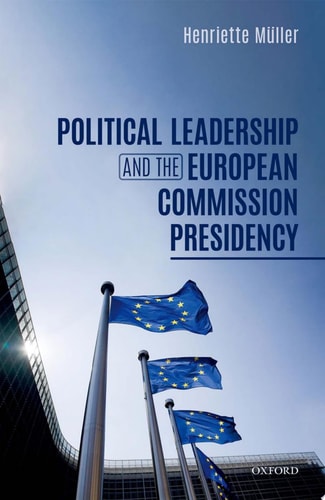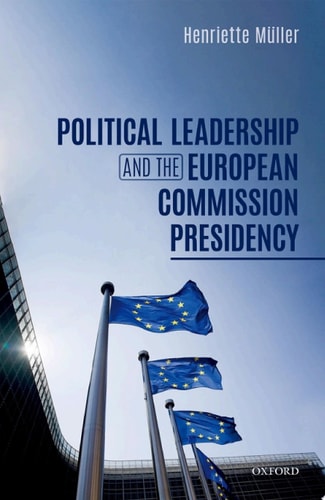
Political Leadership and the European Commission Presidency
0
0
As an Amazon Associate and affiliate partner, Menrva Books earns from qualifying purchases. Learn more
Author Description
The EU's pluralistic, nonhierarchical system of multilevel governance lacks clear structures of both government and opposition. According to the EU treaties, the presidency of the European Commission is thus not explicitly expected to exercise political leadership. However, the position cannot effectively be exercised without any demonstration of such leadership due to its many leadership functions. Examining this curious mix of strong political demands, weak institutional powers, and need for political leadership, this book systematically analyses the political leadership performance of the presidents of the European Commission throughout the process of European integration. The basic argument is that Commission presidents matter not only in the process of European integration, but that their impact varies according to how the different incumbents deal with the institutional structure and the situational circumstances, and thus their available strategic choices. The primary research question is thus, What makes political leadership in European governance successful and to what extent (and why) do Commission presidents differ in their leadership performance? In addressing this question, this book departs from existing research on EU leadership, which has to date often analysed either the EU's institutional structure and its potential for leadership or mainly focused on only the most recent incumbents in case study analyses. Focusing on the multiterm European Commission presidents Walter Hallstein, Jacques Delors, and José Manuel Barroso, this book conceptualizes their political leadership as a performance, and thus systematically analyzes their agenda-setting, mediative-institutional, and public outreach performance over the entire course of their presidential terms.
Menrva's Summary
THE THESIS
What makes political leadership in European governance successful, and to what extent do European Commission presidents differ in their leadership performance? Henriette Müller, a scholar of European politics, investigates the paradox of the Commission presidency, which requires political leadership despite lacking formal hierarchical authority. By analyzing the strategic choices of specific incumbents, the author argues that presidential impact is contingent upon how individuals navigate institutional constraints and situational variables. The work utilizes a performance-based framework to evaluate how leaders manage the intersection of weak formal power and high political demand.
THE SCOPE MAP
What You Will Find
- Comparative analysis of three multi-term Commission presidents: Walter Hallstein, Jacques Delors, and José Manuel Barroso.
- A conceptual framework defining leadership as a performance consisting of agenda-setting, mediative-institutional, and public outreach activities.
- Systematic evaluation of leadership performance across the entire duration of presidential terms.
Scope Limits
- The study does not provide an exhaustive biography of every Commission president in history.
- The analysis focuses primarily on the selected three case studies rather than a broad quantitative survey of all EU administrative roles.
THE AUTHORITY PERSPECTIVE
Experts recognize this work as a significant contribution to the study of EU executive leadership, particularly for its shift toward a performance-based analytical model. Readers frequently note the academic density of the prose, which is well-suited for students and researchers of European integration and institutional governance.
Page Count:
340
Publication Date:
2019-01-01
Publisher:
OUP Oxford
ISBN-10:
0192579258
ISBN-13:
9780192579256
Government
International relations
European Union
Leadership Studies
Public Administration