Unequal Europe
0
0
As an Amazon Associate and affiliate partner, Menrva Books earns from qualifying purchases. Learn more
Author Description
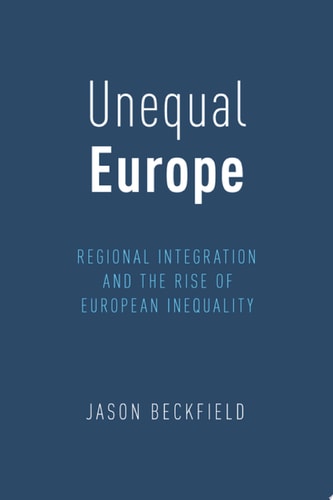
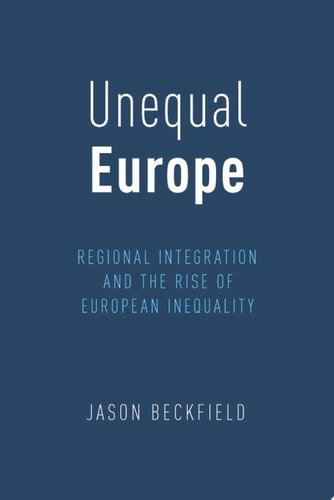
The Euro-crisis Of 2009-2012 Vividly Demonstrated That European Union Policies Matter For The Distribution Of Resources Within And Between European Nation-states. Throughout The Crisis, Distributive Conflicts Between The Eu's Winners And Losers Worsened, And Are Still Reverberating In European Politics Today. In Unequal Europe, Jason Beckfield Demonstrates That There Is A Direct Connection Between European Integration And The Increase In European Income Inequality Over The Past Four Decades. He Places The Recent Crisis Into A Broader Sociological, Political, And Economic Perspective By Analyzing How European Integration Has Reshaped The Distribution Of Income Across The Households Of Europe. Using Individual-and Household-level Income Survey Data, Combined With Macro-level Data On Social Policies, And Case Studies Of Welfare Reforms In Eu And Non-eu States, Beckfield Shows How European Integration Has Re-stratified Europe By Simultaneously Drawing National Economies Closer Together And Increasing Inequality Among Households. Explaining How, Where, And Why Income Inequality Has Changed In The Eu, Unequal Europe Answers The Question: Who Wins And Who Loses From European Integration?
Menrva's Summary
THE THESIS
This book investigates the causal relationship between European integration and the rising levels of income inequality observed across European nation-states over the past four decades. Jason Beckfield, a professor of sociology, utilizes a multi-scalar analytical framework to examine how the structural shifts within the European Union have influenced the distribution of resources. By synthesizing macro-level policy data with individual and household-level income surveys, he argues that the process of integration has simultaneously unified national economies while exacerbating socioeconomic stratification among households.
THE SCOPE MAP
What You Will Find
- Longitudinal analysis of income inequality trends from the 1970s to the present.
- Comparative case studies of welfare state reforms in both EU and non-EU member states.
- Quantitative assessment of household-level income data alongside macro-level social policy indicators.
Scope Limits
- The text focuses primarily on income distribution and does not provide an exhaustive analysis of non-economic social indicators or cultural integration metrics.
THE AUTHORITY PERSPECTIVE
Scholars in political sociology and European studies frequently cite this work for its rigorous integration of quantitative data and institutional analysis. Experts note that the text provides a necessary structural explanation for the distributive conflicts that have defined contemporary European politics.
Page Count:
224
Publication Date:
2019-01-01
Publisher:
Oxford University Press
ISBN-10:
0190494271
ISBN-13:
9780190494278
Economics
Sociology
Public Policy
European Union
Community Tags
Other Editions(2)
Similar Books