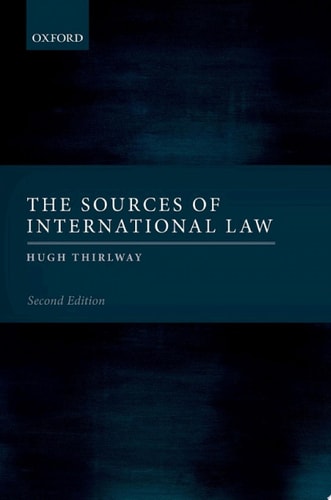
The Sources of International Law
0
0
As an Amazon Associate and affiliate partner, Menrva Books earns from qualifying purchases. Learn more
Author Description
This new edition of Hugh Thirlway's authoritative text provides an introduction to one of the fundamental questions of the discipline: what is, and what is not, a source of international law. Traditionally, treaties between states and state practice were seen as the primary means with which to create international law. However, more recent developments have recognized customary international law, alongside international treaties and instruments, as a key foundation upon which international law is built. This book provides an insightful inquiry into all the recognized, or asserted, sources of international law. It investigates the impact of ethical principles on the creation of international law; whether 'soft law' norms come into being through the same sources as binding international law; and whether jus cogens norms, and those involving rights and obligations erga omnes have a unique place in the creation of international legal norms. It studies the notion of 'general principles of international law' within international law's sub-disciplines, and the evolving relationship between treaty-based law and customary international law. Re-examining the traditional model, it investigates the increasing role of international jurisprudence, and looks at the nature of international organisations and non-state actors as potential new sources of international law. This revised and updated book provides a perfect introduction to the law of sources, as well as innovative perspectives on new developments, making it essential reading for anyone studying or working in international law.
Menrva's Summary
THE THESIS
This text investigates the fundamental question of what constitutes a valid source of international law within a modern, evolving legal framework. Hugh Thirlway, a recognized authority in the field, utilizes his extensive background to analyze the traditional reliance on treaties and state practice. He evaluates how these established mechanisms interact with contemporary developments, including customary law, ethical principles, and the influence of non-state actors.
THE SCOPE MAP
What You Will Find
- Analysis of treaty-based law versus customary international law
- Examination of 'soft law' norms and their binding status
- Investigation into jus cogens norms and erga omnes obligations
- Assessment of international jurisprudence and the role of international organizations
Scope Limits
- Does not provide a comprehensive history of every individual international treaty
- Does not serve as a practical handbook for litigation procedures
THE AUTHORITY PERSPECTIVE
Legal scholars and practitioners frequently cite this work as a foundational text for understanding the complexities of international legal sources. Experts highlight the clarity of the prose, noting that it effectively balances academic rigor with accessible explanations for students and professionals alike.
Page Count:
269
Publication Date:
2019-01-01
Publisher:
OUP Oxford
ISBN-10:
0192578928
ISBN-13:
9780192578921
Professional Career & Trade
Law
Academic
Legal Theory
International Law
Community Tags
Other Editions(4)
Similar Books










Reader Comments
Share Your Thoughts
No comments yet. Be the first to share your thoughts!