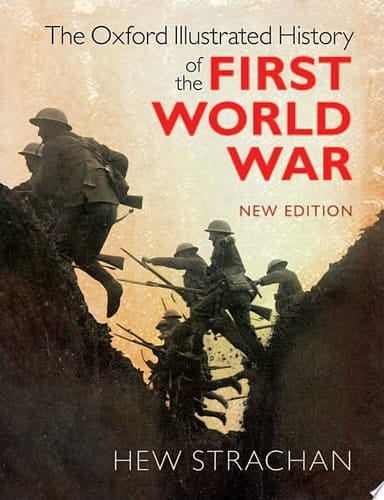
Author Description
The Moment Of Liberation In Western Europe, 1943-1948, Regards The Final Two Years Of World War Ii And The Immediate Post-liberation Period As A Moment In Twentieth Century History, When The Shape And Contours Of Postwar Western Europe Appeared Highly Uncertain And Various Alternatives And Conflicting Visions Were Up For Grabs. After Close To Six Years Of Total War, Nazi Terror, And Brutal Occupation Policies, A Growing Number Of Europeans Were No Longer Content Solely To Fight For National Liberation From Fascist Control. Having Staked Their Lives In Military And Civilian Resistance To Nazism And Italian Fascism Across The Continent, Surviving Activists Were Aiming To Ensure That Such A Political And Social Catastrophe Would Never Befall Europe Again. In The Closing Moments Of World War Ii, Hundreds Of Thousands Of Antifascist Activists Had Begun To Identify With The Famous Quote Penned By The Exiled German Social Theorists, Max Horkheimer, Who Had Boldly Proclaimed In Early September 1939: 'whoever Is Not Prepared To Talk About Capitalism Should Also Remain Silent About Fascism.' The Economic And Political Elites In Prewar Societies Were Increasingly Regarded As Co-responsible For War, Fascism, And Occupation Policies, From Which Many Had Benefited Significantly And Often Enthusiastically. There Were Extensive Popular Social Movements At Work In Almost Every Single State Which Aimed To Construct Postwar Societies In Which Grassroots Democracy And The Free Association Of Rank-and-file Activists Would Replace The Profit Principle And The Top-down Jacobin Orientation By Traditional Elites. This Study For The First Time Reconstructs The Parameters Of This Contest Over The Shape Of Postwar Western Europe From A Consistently Transnational Perspective.
Menrva's Summary
THE THESIS
This work investigates the period between 1943 and 1948 to determine how grassroots resistance movements attempted to redefine the political and economic structure of Western Europe in the immediate aftermath of World War II. Gerd-Rainer Horn, a historian specializing in European social movements, utilizes a transnational framework to analyze the tension between traditional elites and antifascist activists. The author argues that the post-liberation era was a period of profound uncertainty where the rejection of fascism was inextricably linked to a critique of capitalism. By examining the activities of resistance groups across multiple nations, the book reconstructs the competing visions for a postwar order that sought to replace traditional top-down governance with grassroots democracy.
THE SCOPE MAP
What You Will Find
- A comparative analysis of resistance movements in various Western European states.
- An examination of the ideological shift linking the critique of fascism to the critique of capitalism.
- A reconstruction of the conflict between grassroots activists and prewar political elites.
Scope Limits
- The study focuses primarily on the immediate post-liberation period and does not cover the long-term consolidation of the Cold War order.
- The analysis is limited to Western Europe and does not provide an exhaustive account of Eastern European developments.
THE AUTHORITY PERSPECTIVE
Historians and scholars of European history identify this work as a significant contribution to the study of transnational social movements during the mid-twentieth century. Readers frequently note the academic density of the prose and the author's rigorous use of primary source material to challenge traditional narratives of postwar reconstruction.
Page Count:
288
Publication Date:
2020-01-01
Publisher:
Oxford University Press
ISBN-10:
0192582860
ISBN-13:
9780192582867
History
20th Century
European History
World War
Community Tags
Similar Books