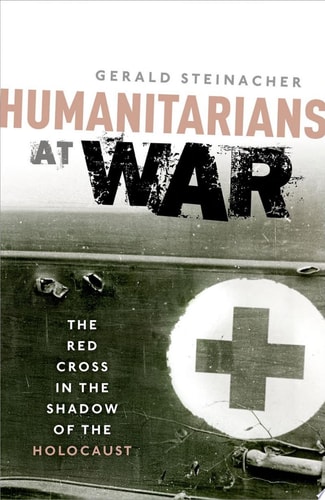
Humanitarians at War: The Red Cross in the Shadow of the Holocaust
0
0
As an Amazon Associate and affiliate partner, Menrva Books earns from qualifying purchases. Learn more
Author Description
From the brink of dissolution in 1945 to the triumph of the Geneva Conventions in 1949, via the Nuremberg Trials, runaway Nazis, and furious battles with communist critics on the eve of the Cold War, this is the intriguing and remarkable story of the International Red Cross - and how it survived its ambiguous relationship with the Nazis during the Second World War. The Geneva-based International Committee of the Red Cross (ICRC) is one of the world's oldest, most prominent, and revered aid organizations. But at the end of World War II things could not have looked more different. Under fire for its failure to speak out against the Holocaust or to extend substantial assistance to Jews trapped in Nazi camps across Europe, the ICRC desperately needed to salvage its reputation in order to remain relevant in the post-war world. Indeed, the whole future of Switzerland's humanitarian flagship looked to hang in the balance at this time. Torn between defending Swiss neutrality and battling Communist critics in the early Cold War, the Red Cross leadership in Geneva emerged from the world war with a new commitment to protecting civilians caught in the crossfire of conflict. But they did so while defending former Nazis at the Nuremberg Trials and issuing travel papers to many of Hitler's former henchmen. These actions did little to silence the ICRC's critics, who unfavourably compared the 'shabby' neutrality of the Swiss with the 'good' neutrality of the Swedes, their eager rivals for leadership in international humanitarian initiatives. In spite of all this, by the end of the decade, the ICRC had emerged triumphant from its moment of existential crisis, navigating the new global order to reaffirm its leadership in world humanitarian affairs against the challenge of the Swedes, and playing a formative role in rewriting the rules of war in the Geneva Conventions of 1949. This uncompromising new history tells the remarkable and intriguing story of how the ICRC achieved this.
Menrva's Summary
THE THESIS
This work investigates how the International Committee of the Red Cross (ICRC) navigated an existential crisis in the immediate aftermath of World War II to secure its institutional survival and redefine international humanitarian law. Gerald Steinacher, a historian specializing in the post-war era and Nazi flight, utilizes archival records from the ICRC and Swiss government to analyze the organization's transition from a compromised neutral entity during the Holocaust to a central architect of the 1949 Geneva Conventions. The text argues that the ICRC's survival was contingent upon a complex balancing act between defending its wartime record, managing Cold War geopolitical pressures, and competing with Swedish humanitarian initiatives.
THE SCOPE MAP
What You Will Find
- Analysis of the ICRC's institutional response to the Holocaust and Nazi atrocities.
- Documentation regarding the issuance of travel papers to former Nazi officials.
- Examination of the rivalry between Swiss and Swedish humanitarian organizations.
- Historical context surrounding the development of the 1949 Geneva Conventions.
Scope Limits
- The text focuses primarily on the institutional and diplomatic history of the ICRC rather than a comprehensive account of all individual field operations.
- It does not provide an exhaustive biography of every ICRC official involved in the post-war transition.
THE AUTHORITY PERSPECTIVE
Historians and scholars of international relations recognize this work as a rigorous examination of the moral and political complexities faced by humanitarian organizations in the mid-20th century. Readers frequently note the dense, archival-heavy nature of the prose, which provides a detailed look at the institutional survival strategies of the ICRC.
Page Count:
344
Publication Date:
2017-01-01
Publisher:
OUP Oxford
ISBN-10:
0191014982
ISBN-13:
9780191014987
History
20th Century
World War
Jewish History
European History
Military History
International relations
Community Tags
Similar Books